The Short Answer
Air beauty tools are popular in 2026 because they promise one thing people actually want: faster styling with less reliance on extreme heat. Hot air brushes, blow-dry brushes, and multi-stylers use airflow plus controlled heat to dry, smooth, shape, or curl hair while it is still damp. The best choice is not automatically the most expensive tool. It is the one that matches your hair texture, styling patience, storage space, and the looks you repeat most often.
If you only want a smooth everyday blowout, a dedicated hot air brush may make more sense than a full multi-styler kit. If you regularly switch between curls, volume, smoothing, and rough drying, a multi-styler with interchangeable attachments may justify the extra cost. The mistake is buying a tool for fantasy hair rather than real mornings. A great air styler should simplify the routine you already do, not create a new ten-step ritual that lives untouched under the sink.
Why Air Styling Is Trending Now
The category is moving quickly because major beauty-tech brands keep expanding it. Dyson introduced the Airsmooth styling brush on September 3, 2026, calling it the company's first dedicated hot air brush in its Airsmooth launch announcement. The pitch is everyday drying and smoothing with airflow technology, pivoting bristles, and a simpler routine than a large attachment system. That matters because it brings the air-styling idea closer to daily use, not just special-occasion styling.
Dyson also refreshed its Airwrap line earlier in 2026 with new attachments and stronger airflow positioning through the Airwrap Co-anda2x announcement. SharkNinja has been pushing the same category from another angle. Its FlexStyle IonCurl announcement focused on frizz, curl definition, and speed. Put together, these launches show that air beauty is no longer a single hero product. It is becoming a full appliance category.
Hot Air Brush Or Multi-Styler
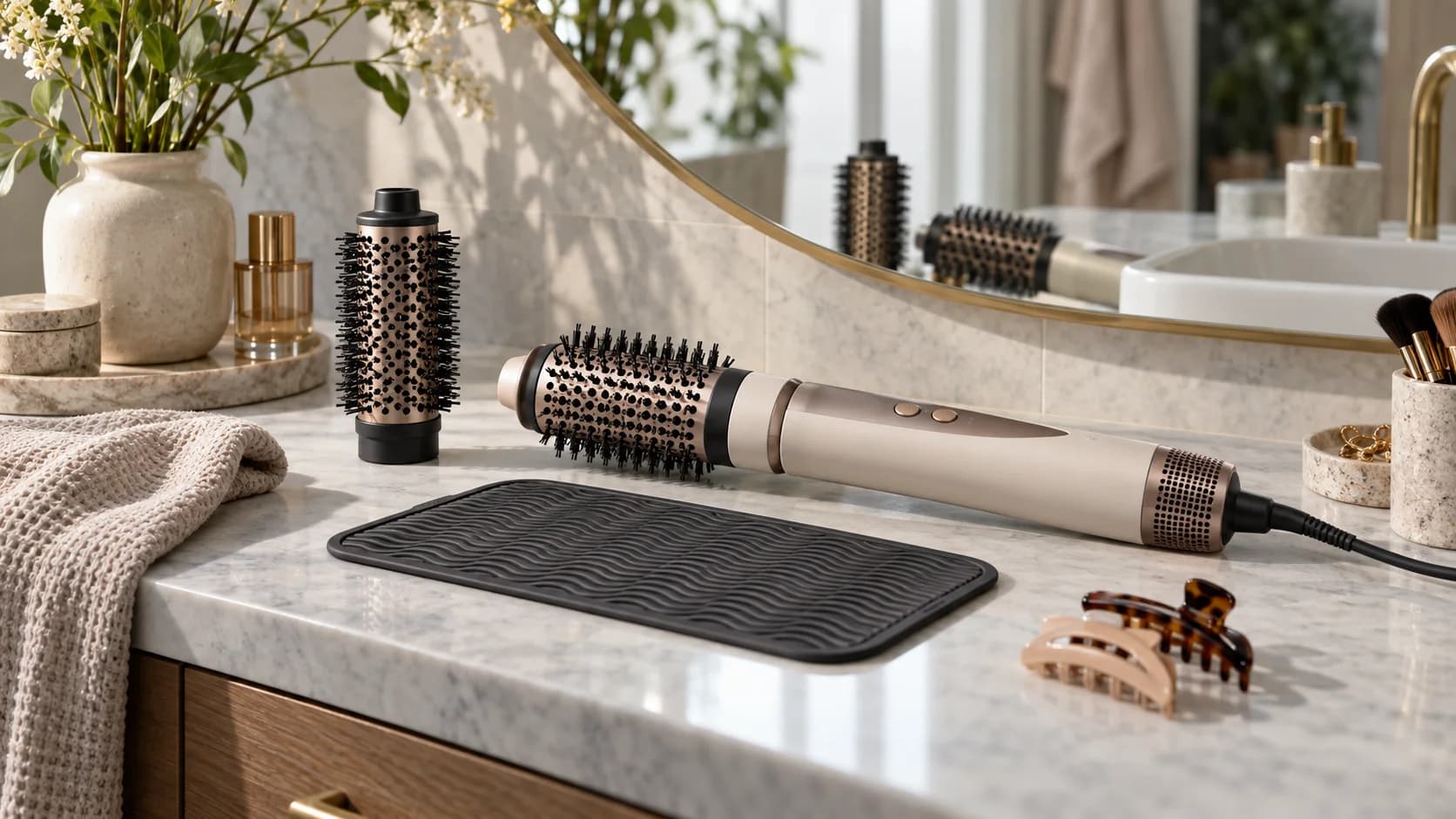
The first decision is format. A hot air brush usually looks like a round or paddle brush with airflow running through it. It is best for smoothing, stretching, adding lift at the roots, shaping ends, and creating a soft blowout finish. It is usually easier to learn because the motion feels like brushing and blow-drying at the same time. The downside is that it may not replace a curling iron or a full hair dryer for everyone.
A multi-styler is more modular. The Dyson Airwrap Origin product page describes attachments for drying, curling, and shaping with Coanda airflow, along with heat control designed to avoid extreme temperatures. Shark's FlexStyle product page similarly frames the device as a dryer and multi-styler with auto-wrap curlers, brush attachments, and a concentrator. These systems give you range, but range only helps if you will actually swap attachments and learn the technique.
Heat Control Matters
Air styling still uses heat, so shoppers should not treat it as damage-proof. The benefit is that many of these tools aim to style with moving air and controlled temperatures instead of clamping hair between very hot plates or wrapping it around a high-heat barrel. Dyson says its Airwrap Origin measures airflow temperature repeatedly and keeps heat under a stated threshold to avoid extreme heat damage. That is useful information, but shoppers should still compare real settings, not only slogans.
Look for multiple heat and speed settings, a cool-shot option, and attachments that do not snag or overgrip the hair. Fine hair may need lower heat and gentler airflow to avoid frizz or flattening. Thick or coily hair may need stronger airflow, better tension, and enough power to dry efficiently. If the tool only works when hair is nearly dry, that should be part of the buying decision. A product that saves time for one hair type may add time for another.
Attachment Overload Is Real
Beauty tools are easy to overbuy because attachments look useful in the box. Before paying for a large kit, list the styles you actually wear in a normal month. If the answer is smooth roots, turned-under ends, and quick volume, a brush attachment may do most of the work. If the answer includes loose waves, curled bangs, rough drying, stretching, and polished smoothing, a multi-styler kit becomes more reasonable.
Storage also matters. A tool that needs a case, six attachments, a heat mat, clips, and counter space can feel luxurious on day one and annoying by week three. The best air beauty tool is the one that earns a visible place in the bathroom because it is used often. If a product takes longer to set up than your old dryer and brush, it may not survive real life, even if the final style looks better.
Price Versus Daily Value
Air styling spans a wide price range, and expensive tools are not automatically the smartest buy. The value question is cost per use. A premium multi-styler used three times a week for several years may be more reasonable than a cheaper tool that overheats, tangles, or sits unused. At the same time, a dedicated hot air brush can be the better purchase for someone who wants one reliable finish and does not care about curling attachments.
Shoppers should also think about return windows, warranty coverage, replacement attachments, and whether the tool works with local voltage if they travel. A hair tool is closer to a small appliance than a disposable beauty gadget. If it breaks after one season or cannot be cleaned properly, the real price is higher than the sale tag. Good shopping guidance is not only about finding a deal. It is about avoiding the wrong deal.
Who Should Buy One
An air beauty tool makes the most sense for someone who already blow-dries or heat-styles regularly and wants a faster, more controlled routine. It can also help people who struggle to coordinate a round brush and dryer at the same time. For shoulder-length hair, layered cuts, curtain bangs, and soft volume, hot air brushes can be especially practical. For tight curls, very long hair, or highly textured hair, shoppers should pay closer attention to power, attachment shape, and whether reviewers with similar hair report enough tension and drying speed.
It may not be worth buying if you rarely style your hair, prefer wash-and-go routines, or want pin-straight results that require a flat iron. It may also disappoint anyone expecting a salon finish with no learning curve. Air stylers are easier than some traditional tools, but they still require sectioning, drying to the right dampness level, and learning how long to hold tension. The tool helps, but technique still shows.
The Buying Checklist
Before buying, check the tool's airflow power, heat settings, weight, cord length, attachment list, cleaning instructions, warranty, and whether replacement parts are available. Read reviews from people with your hair texture and length rather than only general star ratings. Watch for repeated complaints about tangling, weak airflow, noisy motors, heavy handles, or attachments falling off. Those everyday annoyances matter more than a dramatic before-and-after video.
The bottom line: air beauty tools are worth considering in 2026, but the right one depends on routine fit. Buy the simplest tool that handles your most common style well. Upgrade to a larger multi-styler only when you will use the extra attachments. The most modern beauty tool is not the one with the longest feature list; it is the one that gives you better hair with fewer decisions on an ordinary morning.
Sources
- Introducing the Dyson Airsmooth styling brush
Dyson | Published | Checked
- Dyson relaunches its fastest, most powerful Airwrap Co-anda2x multi-styler with four new attachments
PR Newswire / Dyson | Published | Checked
- Shark Beauty Launches FlexStyle IonCurl
SharkNinja | Checked
- Dyson Airwrap Origin multi-styler and dryer
Dyson | Checked
- Shark FlexStyle Air Styling & Drying System
SharkNinja | Checked
Editorial disclosure
This article was drafted by The Daily Unfold editorial desk using reviewed public product information and manufacturer announcements. It is independent shopping guidance, not sponsored content, and it does not claim hands-on testing unless explicitly stated.