The Short Answer
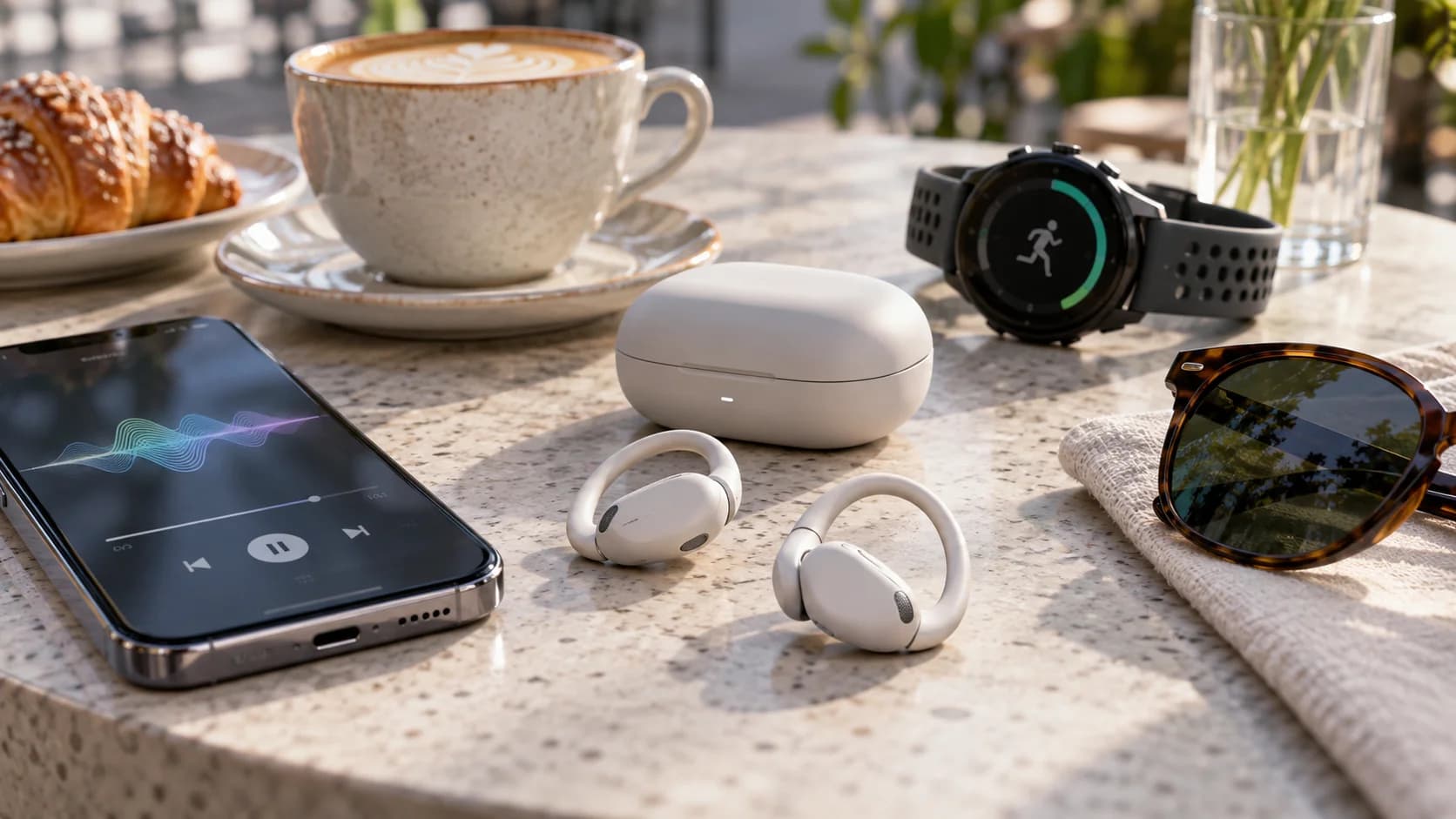
Air earbuds are not one single product type anymore. In 2026, shoppers are choosing between sealed earbuds with silicone tips, open-ear earbuds that leave the ear canal uncovered, and hybrid open-fit designs that try to add noise control without the plugged-in feeling. The right choice depends less on brand hype and more on where you listen: commuting, gym sessions, calls, office focus, walks, travel, or all-day background audio.
If you want maximum noise blocking, sealed in-ear earbuds still have the advantage. If you want comfort and awareness while running, commuting by bike, working at a desk, or talking to people around you, open-ear designs can be much better. The 2026 twist is that open-ear earbuds are no longer only about staying aware. Apple, Bose, Shokz, and others are turning them into serious everyday audio products with better battery life, better microphones, smarter cases, and more advanced processing.
Why Open-Ear Earbuds Are Suddenly Bigger
Apple's new AirPods 5 announcement pushed the category into the spotlight. In its September 9, 2026 AirPods 5 press release, Apple introduced open-ear Active Noise Cancellation, a redesigned acoustic architecture, Live Translation support, and two price tiers. The company says the wireless charging model adds longer battery life and on-stem volume control. That kind of announcement matters because it brings open-ear noise control to a mainstream product line.
Apple's AirPods 5 specifications list Bluetooth 5.3, ANC, Adaptive Audio, Transparency, Conversation Awareness, Voice Isolation, Personalized Spatial Audio, and Live Translation. The regular model is listed with up to four hours of battery life with ANC enabled, while the wireless charging case model is listed with up to five hours under the same condition. Those numbers give shoppers a useful reminder: open-ear comfort is appealing, but battery life and case features still matter in daily use.
Open-Ear Comfort Versus Noise Blocking
Open-ear earbuds are built around awareness. They do not seal the ear canal in the same way as silicone-tip earbuds, so outside sound remains more present. That can be a strength for outdoor running, walking near traffic, office listening, or parents who need to hear the room. It can also be a weakness on planes, trains, and loud streets. If you want quiet above everything else, a sealed earbud with strong ANC may still be the safer pick.
This is why shoppers should avoid treating open-ear ANC claims as identical to sealed ANC. Noise cancellation can reduce certain external sounds, but physics still matters. A design that leaves the ear open usually cannot isolate sound the same way a tight seal can. The better way to compare is by use case. Open-ear ANC may make cafe noise or office hum less intrusive while preserving comfort. It may not create the same silence you expect from premium travel earbuds.
Bose, Shokz, And The Fitness Angle
Bose has helped define the lifestyle side of open earbuds. The Bose Ultra Open Earbuds specifications list an open-ear fit, built-in microphone, Bluetooth 5.3, IPX4 rating for the earbuds, and up to seven hours of battery life with immersive audio off. Bose positions the product around wearing audio without fully closing off the world, which is exactly where open-ear designs feel most natural.
Shokz leans harder into workouts and awareness. Its OpenFit 2 product page lists an open-ear design, IP55 water resistance, up to 11 hours on a single charge, and up to 48 hours with the case. Shokz also emphasizes secure fit and situational awareness. For runners, cyclists, walkers, and gym users, the hook-style fit may matter more than tiny case size. The best earbud is the one that stays put when your head moves.
Battery Life Needs Context
Battery comparisons can mislead if you only read the biggest number. Some brands advertise total case battery life, while others highlight single-charge listening time. Some battery ratings assume ANC off, immersive audio off, moderate volume, or specific device settings. A pair that lasts seven hours without advanced processing may last much less with every smart feature enabled. Before buying, check both the earbud runtime and the total case runtime under the mode you expect to use most.
Quick charging is another practical detail. A five- or ten-minute top-up can matter more than a huge total case number if you often forget to charge before leaving. Case charging support also matters. Apple's AirPods 5 wireless charging case supports USB-C plus Apple Watch and Qi-certified chargers, while the base model uses USB-C. That difference may sound small, but it changes convenience for people already surrounded by wireless chargers.
Calls, Translation, And AI Features
Earbuds are becoming tiny communication devices, not only music accessories. Apple's AirPods 5 press release and product pages emphasize Siri AI and Live Translation, while the specifications list Voice Isolation and studio-quality audio recording. Those features are especially relevant for people who take calls outside, record short videos, or move between languages during travel and work. The buying question is whether those features are available in your region, language, phone model, and software version.
Call quality is also affected by fit and environment. Open-ear designs may be more comfortable for long calls, but microphones still need to handle wind, traffic, typing, and background conversation. Look for products that explain microphone count, noise handling, and supported call features, then read user feedback from people using the earbuds in the same conditions. A quiet home office and a busy sidewalk are very different microphone tests.
How To Choose The Right Pair
Start with your main listening environment. For commuting by train or flying, sealed ANC earbuds may be better. For outdoor workouts, open-ear hooks can improve awareness and stability. For Apple users who want easy pairing, Siri, Live Translation, and a familiar case, AirPods 5 will be a natural comparison point. For all-day comfort without a sealed tip, Bose and Shokz-style products deserve attention. For Android users, app support, codec support, and multipoint pairing may matter more than ecosystem polish.
Then check five practical details: single-charge battery life, water resistance, case size, physical controls versus touch controls, and replacement support. Small earbuds can be easy to lose. Touch controls can misfire with sweat. Some open-ear designs leak more sound at higher volume. Some charging cases are not water resistant even when the earbuds are. The best purchase is not the spec-sheet winner; it is the pair whose compromises match your day.
The Bottom Line
Air earbuds in 2026 are exciting because the category is finally diversifying. Instead of choosing only between cheap buds and sealed premium ANC, shoppers can pick open-ear awareness, AI-assisted features, workout stability, longer case life, or deeper ecosystem integration. Apple bringing more advanced open-ear features to AirPods 5 will likely make this category even more visible through the rest of the year.
The smart move is to buy by use case. Choose sealed ANC for maximum quiet, open-ear hooks for exercise and awareness, open-fit mainstream earbuds for comfort and convenience, and ecosystem-first models when phone integration matters most. Do that, and the trend becomes useful instead of confusing.
Sources
- Apple introduces AirPods 5 with best-in-class open-ear Active Noise Cancellation
Apple Newsroom | Published | Checked
- AirPods 5 Technical Specifications
Apple | Checked
- Bose Ultra Open Earbuds specifications
Bose Support | Checked
- OpenFit 2
Shokz | Checked
Editorial disclosure
This article was drafted by The Daily Unfold editorial desk using reviewed public product information and manufacturer specifications. It is independent shopping guidance, not sponsored content, and it does not claim hands-on testing unless explicitly stated.