The Short Answer
Arcade games still work in 2026 because they respect the player's time. A good arcade browser game loads quickly, explains itself through play, gives feedback immediately, and makes restarting feel natural. That formula is old, but it fits modern habits perfectly. People move between phones, laptops, school breaks, work pauses, and group chats. A game that starts instantly has an advantage over one that asks for a download, update, account, tutorial, and storage space.
This is why arcade-style games are a smart category for The Daily Unfold's Play section. They can be simple without feeling cheap, especially when the controls are polished and the scoring loop is clear. Brick breakers, runners, dodgers, puzzle reflex games, card-based quick rounds, and one-button skill games all share the same advantage: players understand the goal quickly and can chase a better score within seconds.
The Market Still Rewards Simple Access
The games market is huge and still growing. Newzoo's 2026 global games market key numbers forecast $213.9 billion in global games revenue for 2026, with mobile remaining the largest platform and total players reaching billions worldwide. Those numbers cover far more than browser arcade games, but they explain the audience context: games are no longer a niche habit. Quick digital play is mainstream.
At the same time, access matters. Players do not always want a major console session or a large installed app. Sometimes they want a two-minute challenge. Browser games fit that moment because links are portable. A player can open a game from search, a message, a homepage tile, or a social post. That friction advantage is why the web keeps mattering even as app stores, consoles, and subscription libraries compete for attention.
Poki Shows The Scale Of Web Gaming
Poki is one of the clearest public examples of modern web gaming at scale. Its developer site describes the platform as reaching 100 million monthly players, supporting hundreds of developers, and generating more than one billion gameplays per month. Its developer documentation emphasizes playtesting, QA, marketing support, and web-first publishing. That is not nostalgia for old Flash portals. It is a serious distribution model for instant-play games.
Poki's own blog also points to renewed interest in browser gaming. Its 2026 web gaming posts include topics such as the state of web gaming, what it takes to build web games in 2026, and high-quality browser game design. For independent developers, the appeal is clear: build a game that works across devices, test quickly, and reach players without forcing them through an app-store funnel.
Why Arcade Design Fits The Browser
Arcade design is built around clarity. The player needs to know what to avoid, what to collect, how to score, and when risk is worth taking. That makes arcade games ideal for web distribution because they do not require a long onboarding process. A player can learn through the first failure. If the game is fair, the second run feels better. If the score, timer, or level structure is visible, the third run becomes a challenge.
Browser arcade games also benefit from constraints. Limited input options, small screens, and short sessions force designers to focus. A game should work with keyboard, touch, and sometimes pointer controls. It should load fast on mobile data. It should survive interruptions. It should avoid tiny UI elements that only work on desktop. Those constraints make the best arcade games cleaner, not weaker.
What Makes A Modern Arcade Game Feel Good
The difference between a forgettable mini game and a sticky arcade game is feel. Movement needs to respond instantly. Collisions need to feel fair. Difficulty should rise in a way players can read. Visual effects should confirm success without hiding danger. Sound should support the rhythm without becoming irritating. A good restart button is almost as important as the first level because arcade games are about repeated attempts.
Progression helps too, but it should not bury the core loop. Stages, skins, missions, daily challenges, medals, and unlockable modes can all work if the first thirty seconds are already fun. A weak core loop cannot be rescued by rewards. A strong core loop can become much more replayable with a small layer of goals. This is the lesson that classic arcade design keeps teaching modern games.
Why Mobile-Friendly Web Games Matter
Mobile is still the largest games platform by revenue in Newzoo's 2026 market forecast, and that matters for browser arcade games. A modern web arcade game cannot be desktop-only unless it is intentionally targeting keyboard players. Most casual players will discover it on a phone, or at least expect it to work there. That means touch controls, portrait or flexible layouts, readable text, fast assets, and no tiny precision targets unless the game is designed around them.
Mobile web also changes discovery. A game tile, headline, or short clip can bring someone directly into a playable page. There is no app-store listing to read first. The landing screen has to become the onboarding. This is why icon design, first-frame clarity, and quick loading are part of game design now. The game starts before the first input.
What This Means For The Daily Unfold
For The Daily Unfold, arcade games can support the broader site in three ways. First, they create repeat visits because scores and stages invite players back. Second, they diversify the site beyond news articles, which can help users spend more time with the brand. Third, they create internal linking opportunities between games, gaming articles, and category pages. A Play section can be more than a side feature if it is updated consistently and presented with strong tiles.
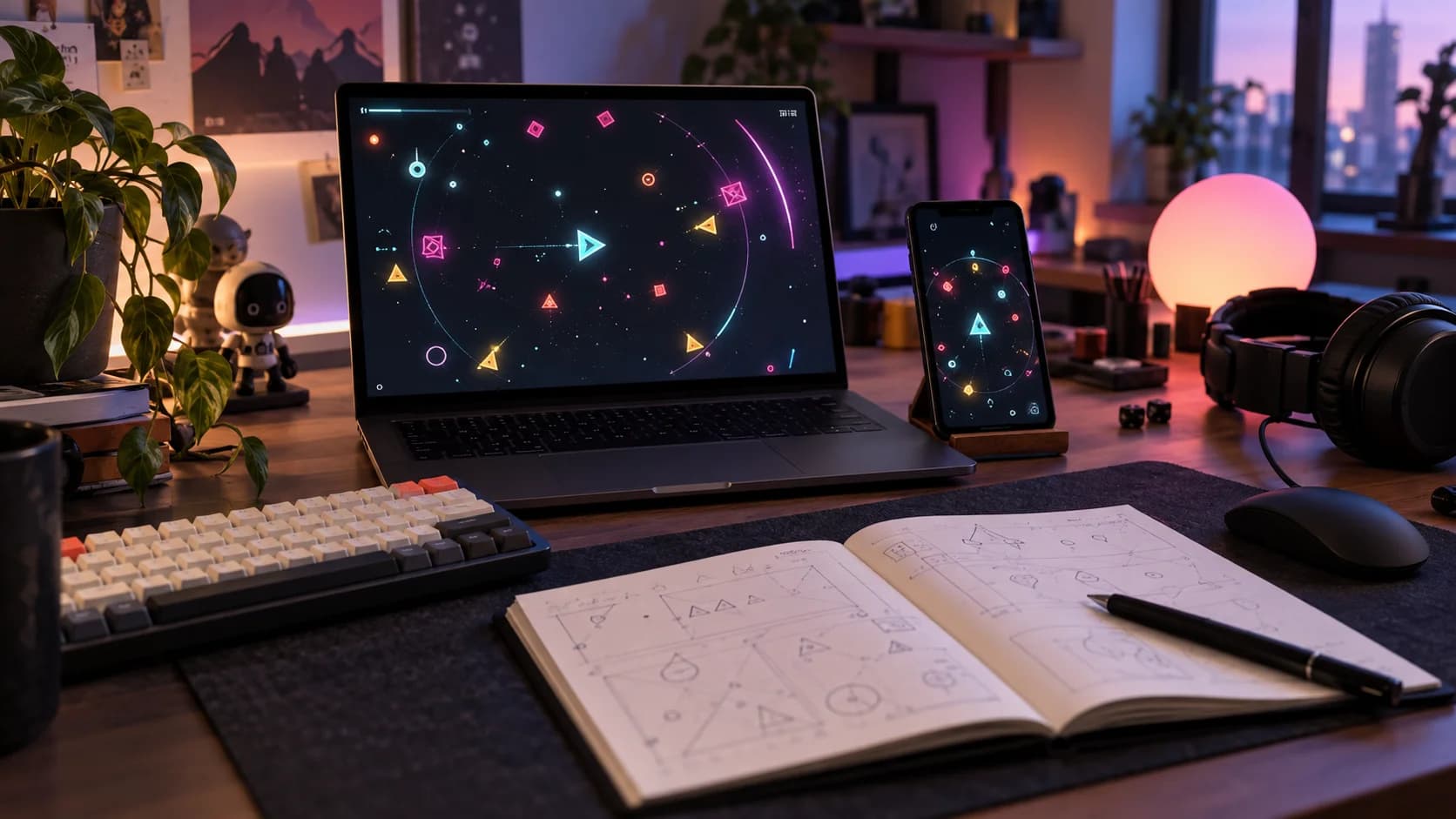
The best next step is to build a small library of polished games rather than many unfinished experiments. Brick Breaker, Rooftop Rush, Neon Drift, and Prism Pulse already establish a direction. Future arcade additions should each have a distinct mechanic, icon, short description, mobile control scheme, and replay hook. The archive should feel like a shelf of small app icons: easy to scan, quick to launch, and consistent in quality.
The Bottom Line
Arcade games are back on the web because the web never lost its biggest strength: instant access. When a game loads quickly, teaches itself, works on mobile, and gives players a reason to try again, it can compete for attention without a download. That is why browser arcade games still belong in a modern media site.
The opportunity in 2026 is not to copy old arcade machines. It is to apply arcade discipline to modern devices: clean controls, readable visuals, quick sessions, satisfying feedback, and lightweight progression. Done well, a browser arcade game can feel small in file size but big in replay value.
Sources
- 2026 Global games market key numbers
Newzoo | Published | Checked
- Poki for Developers
Poki | Checked
- Working with Poki
Poki Documentation | Checked
- Poki Blog
Poki | Checked
Editorial disclosure
This article was drafted by The Daily Unfold editorial desk using reviewed public games-market and web-gaming platform sources. It is general games analysis and not sponsored content.