The Short Answer
The best Bluetooth speaker in 2026 is the one that fits where you actually listen: a desk, kitchen, dorm room, patio, beach bag, picnic blanket, or party. Bigger is not automatically better. A large speaker may sound fuller, but a smaller model you carry every weekend can be the smarter purchase. The useful buying question is simple: do you need pocket portability, all-day battery, pool durability, room-filling volume, stereo pairing, or a speaker that can also charge your phone?
Bluetooth speaker marketing now includes AI sound tuning, Auracast sharing, IP ratings, app EQ, USB-C lossless playback, power-bank features, and replaceable batteries. Those features can be useful, but the basics still decide long-term value: sound balance, volume without distortion, battery life at realistic volume, ruggedness, controls, weight, and whether the speaker is easy to live with.
Why Speakers Feel More Advanced Now
JBL's current portable lineup shows how quickly the category is moving. The company's Portables page highlights speakers with IP68 durability, Auracast support, app controls, AI Sound Boost, USB-C lossless playback on some models, and longer playtime modes. The JBL Flip 7 page lists Bluetooth 5.4, IP68 protection, Auracast support, a 14-hour maximum music playing time, and app support.
Bose is pushing a different version of the same trend. Its SoundLink Plus specifications list Bluetooth 5.4, IP67 protection, Bose app compatibility, USB-C, and up to 20 hours of battery life at a moderate volume. Its SoundLink portable speaker page positions different models around city carry, outdoor use, and bigger group sound. The trend is clear: portable speakers are becoming tougher, smarter, and more specialized.
Match Size To The Job
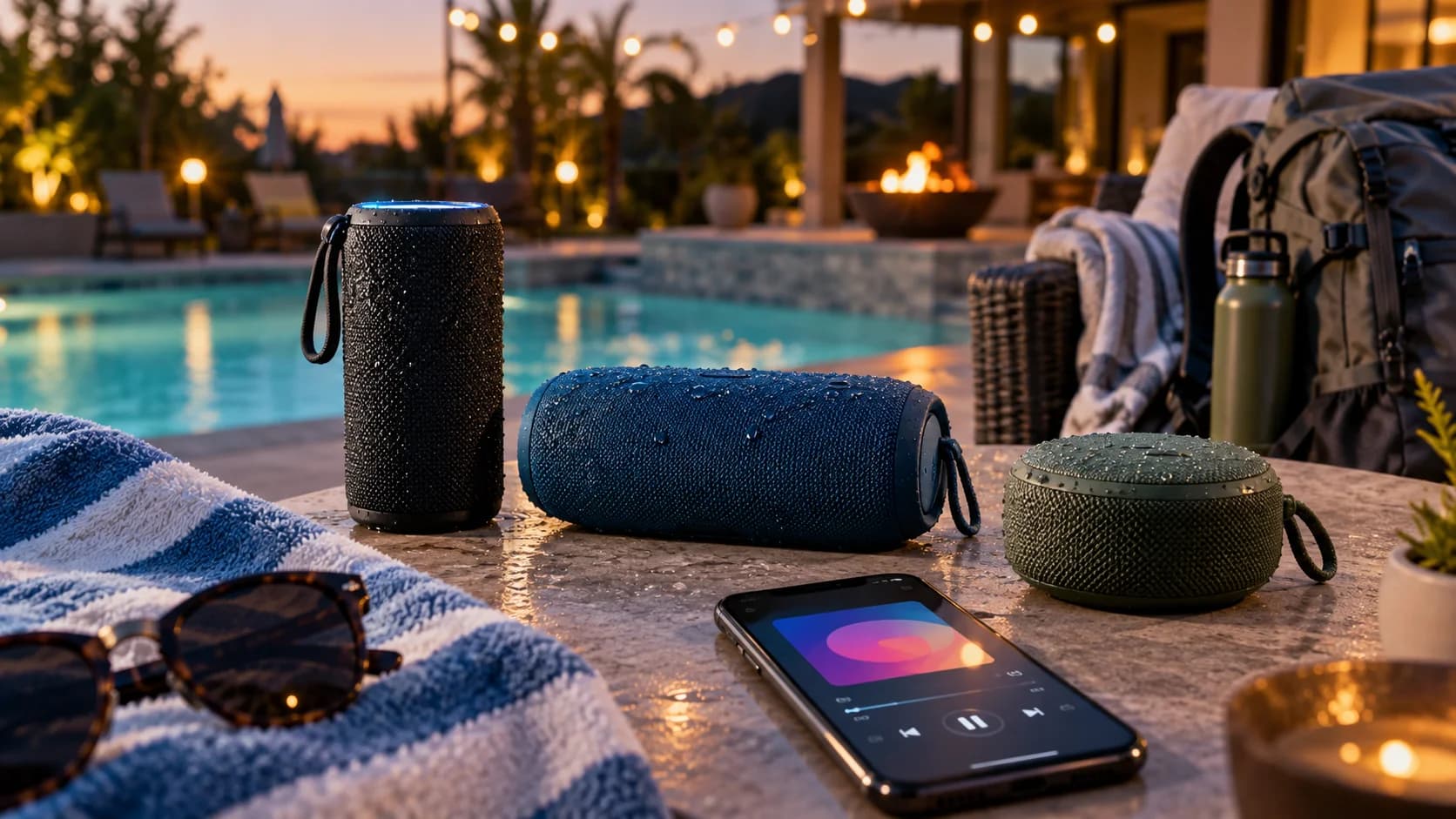
Small speakers are best when portability beats bass. A compact model can clip to a bag, sit on a bathroom shelf, or move between rooms easily. It will not replace a stereo system, but it may be used more often because it is frictionless. Mid-size speakers are the sweet spot for many buyers because they offer stronger bass, better battery, and enough volume for a patio or kitchen while still fitting in a backpack.
Large portable speakers are for groups, parties, outdoor gatherings, and people who care more about output than everyday carry. They can be excellent, but they need storage space and charging discipline. Before buying the loudest model, picture where it will sit during the week. If the answer is a closet, a smaller speaker may be the better speaker for your life.
Understand Waterproof Ratings
Waterproof and dustproof ratings matter because portable speakers go places phones, towels, snacks, and drinks go. IP67 and IP68 are common premium claims, but they are not identical to indestructible. They usually indicate tested resistance to dust and water under specific conditions. Pool splashes, rain, beach dust, and accidental drops are different from long-term abuse, saltwater exposure, or charging a wet port.
JBL markets several portable speakers as waterproof, dustproof, and drop-proof, while Bose says the SoundLink Plus has IP67 protection and durable materials. Shoppers should still read the manual, especially around charging after water exposure. A speaker can be water resistant and still be damaged if the charging port is wet, if seals wear down, or if it is exposed to chemicals, sand, or salt without cleaning.
Auracast Could Change Group Listening
Auracast is one of the more interesting speaker features to watch. The Bluetooth SIG's Auracast media kit describes broadcast audio as a way to share audio and connect listening experiences. JBL's portable lineup describes Auracast as a way to stream music from one device to multiple enabled speakers or headphones. That could be useful for parties, shared listening, classrooms, public venues, or linking speakers without older pairing systems.
The caution is compatibility. A speaker saying Bluetooth 5.4 does not automatically mean every Auracast feature is available in every context. You need compatible transmitters, receivers, software support, and sometimes app setup. If group speaker linking is a must-have, check the exact product page and whether the other speakers you own support the same system. Otherwise, you may end up with a future-looking feature that does not help today.
Battery Life Is A Real-World Number
Battery claims usually depend on moderate volume and feature settings. Bose says the SoundLink Plus can reach up to 20 hours at moderate volume, with reduced time at maximum volume. JBL lists playtime numbers with Playtime Boost options on some models. Those figures are helpful, but louder listening, bass-heavy tracks, lighting effects, cold weather, and phone charging can reduce actual runtime.
Think about how you use a speaker. For a desk or kitchen, a shorter battery may be fine because charging is easy. For camping, beach days, outdoor workouts, or events, battery life and charging time matter much more. USB-C charging is now a practical baseline, and power-bank features can be useful in emergencies. But charging your phone from the speaker also drains the speaker, so treat it as a convenience, not a replacement battery pack.
Sound Quality Is More Than Bass
Portable speakers often market bass because bass is immediately noticeable. Good sound is broader than that. Voices should be clear, podcasts should not sound muddy, cymbals should not hiss painfully, and the speaker should not distort when turned up. A balanced speaker is usually more enjoyable over time than one that wins a five-second bass demo. App EQ can help, but it cannot completely fix poor driver design.
USB-C lossless playback on some JBL speakers is interesting for people who listen from laptops or high-quality music libraries, but it will not matter to everyone. Outdoor noise, speaker size, room reflections, and placement often have a bigger effect than file quality. Put the speaker near a wall and bass may increase. Put it in the open and it may sound thinner. Real listening spaces matter.
The Bottom Line
Bluetooth speakers in 2026 are better and more varied than ever. Buy small for portability, mid-size for everyday versatility, and large for group sound. Prioritize realistic battery life, IP protection, sound at the volume you use, app reliability, and whether new features like Auracast actually fit your devices.
A good portable speaker should disappear into your routine. It should be easy to carry, quick to connect, tough enough for the places you take it, and enjoyable at normal volume. The best choice is not the speaker with the most features. It is the one that keeps getting used after the novelty fades.
Sources
- JBL Portables
JBL | Checked
- JBL Flip 7
JBL | Checked
- Product Specifications: Bose SoundLink Plus Portable Speaker
Bose Support | Checked
- Shop SoundLink Portable Speakers
Bose | Checked
- Auracast broadcast audio media kit
Bluetooth SIG | Checked
Editorial disclosure
This article was drafted by The Daily Unfold editorial desk using reviewed public manufacturer specifications and audio technology sources. It is independent shopping guidance, not sponsored content, and it does not claim hands-on testing unless explicitly stated.