The Short Answer
CES 2026 made one thing clear: consumer technology is moving beyond isolated AI features and toward AI as basic operating infrastructure. The most important story was not a single device, robot, headset, vehicle concept, or smart-home appliance. It was the way AI appeared across product categories that used to be treated separately. Health devices promised more personalized signals, retailers described smarter discovery, mobility companies talked about software-defined vehicles, and hardware makers used AI to explain why familiar products may need new chips, sensors, and services.
That shift matters for readers because it changes how to judge a product announcement. A few years ago, the question was whether a device had an AI feature. After CES 2026, the better question is whether the AI improves a real workflow, lowers friction, makes a device more accessible, or connects safely with the broader system around it. CTA framed its 2026 Tech Trends to Watch around intelligent transformation, longevity technologies, and engineering tomorrow, and that framing matched the show floor pattern: less magic trick, more infrastructure layer CTA consumer tech forecast.
The Numbers Behind The Show
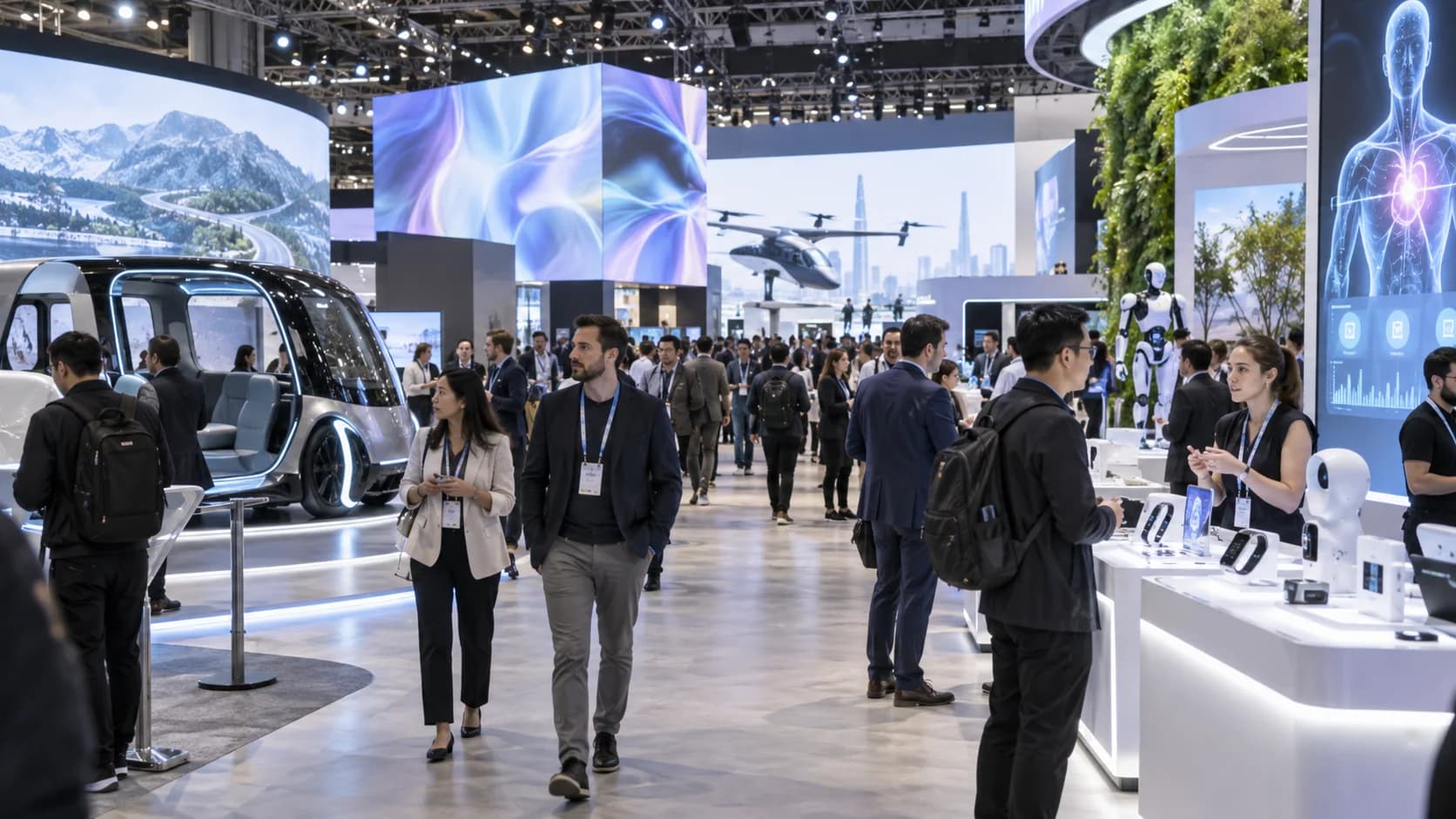
CES remained enormous in 2026, which is part of why the event still works as a useful snapshot of the consumer-tech agenda. CTA said CES 2026 drew more than 148,000 attendees, more than 4,100 exhibitors, over 1,200 startups, 6,900 media attendees, more than 400 conference sessions, and more than 1,300 speakers CES 2026 wrap report. The size of the event does not automatically prove every product category is healthy, but it does show that companies still treat CES as a place to test market language and signal priorities for the year.
The economic backdrop was also important. CTA projected U.S. consumer technology revenue would reach 565 billion dollars in 2026, up 3.7 percent from the prior year, while unit shipments were expected to rise only 0.7 percent CTA consumer tech forecast. That difference suggests growth is not only about selling more boxes. It is also about higher-value devices, services, subscriptions, software, and product categories where intelligence, support, and long-term utility can justify spending.
AI Became Infrastructure
The strongest CES theme was AI becoming a layer that product makers assume, not a feature they explain from scratch. That does not mean every AI claim is worth trusting. It means buyers need sharper filters. A useful AI product should do something observable: automate a repetitive step, catch a signal a human would miss, personalize an experience without making it confusing, or connect devices in a way that saves time.
The event preview described CES 2026 as spanning AI, robotics, digital health, mobility, enterprise, energy, immersive entertainment, and accessibility across 13 venues and 2.6 million net square feet of exhibition space CES preview. That breadth explains why AI at CES is no longer only about chatbots or laptop stickers. It is being attached to sensors, edge processors, retail tools, home systems, vehicles, and care platforms. The practical test is whether the product becomes easier to use after AI is added. If it only adds a dashboard, a subscription, and vague claims, the feature should be treated with caution.
Longevity And Health Tech Moved Up The Agenda
Longevity technology was one of CTA's named trend areas for 2026, and that says a lot about where consumer electronics is headed. Fitness trackers and smart scales helped build the market for personal health data, but the next phase is broader. Devices increasingly aim to support sleep, aging, preventive care, fall detection, medication routines, hearing, mobility, and remote monitoring. For families, that may be more useful than another entertainment screen.
The opportunity is real, but so are the trust questions. Health-adjacent consumer tech can influence decisions about care, insurance conversations, and family planning. The best products in this category need clear evidence, plain-language limits, privacy controls, and explainable recommendations. CES can show the direction of the market, but readers should still look for regulatory status, clinical validation where relevant, data-retention policies, and whether the product can export information to the professionals who need it.
Mobility, Energy, And Robotics Were Practical
Mobility and robotics at CES often get attention because they photograph well, but the more meaningful 2026 story was practical deployment. Vehicle technology is increasingly about software, driver-assistance stacks, battery management, charging experiences, cabin interfaces, and supply-chain resilience. Robotics is also shifting from novelty demos toward warehouse support, elder care, cleaning, inspection, delivery, and companion use cases.
The Innovation Awards category list shows how many practical systems now sit under the CES umbrella, including robotics, smart home, sustainability and energy transition, cybersecurity, digital health, computer hardware, vehicle tech and advanced mobility, AI, and XR or spatial computing CES Innovation Awards. That category spread is useful because it shows where vendors think buyers and investors will look next. The pattern is not one product replacing another. It is devices becoming connected services that need security, energy planning, and software support over time.
Retail Tech Got More Personal
Retail was another quiet but important CES 2026 theme. CTA highlighted AI personalization, omnichannel ecosystems, social shopping, discovery, loyalty, and stronger brand-shopper connections as areas drawing retail attention at the show CES retail preview. That matters because retail technology often reaches consumers before they notice it. Recommendation engines, checkout flows, loyalty apps, product visualization, and customer-service bots can change what people buy and how confident they feel buying it.
For shoppers, the key question is transparency. Personalization can be genuinely helpful when it narrows overwhelming choice and makes comparison easier. It can also become manipulative if it hides alternatives, pushes inventory, or turns loyalty into surveillance. The retail winners after CES 2026 will be the companies that use AI to improve discovery while still giving customers control over data, filters, price comparisons, and returns.
Innovation Awards Show The Breadth
The 2026 Innovation Awards help explain why CES feels less like a gadget show and more like a technology map. CTA said the program received more than 3,600 submissions, a record number, across 36 categories, and added new areas including EdTech, Enterprise Tech, Filmmaking and Distribution, Supply and Logistics, and Travel and Tourism CES Innovation Awards honorees. That category expansion is a signal in itself.
Consumer tech now touches how people learn, move, work, shop, create, rest, and age. That makes CES more useful when readers treat it as an early-warning system rather than a shopping list. Some showcased products will never ship widely. Some will ship with fewer features than promised. But the categories that receive investment and awards often point toward the next two or three years of mainstream product decisions.
What Readers Should Watch Next
After CES 2026, the smartest thing readers can do is follow the boring questions. Does the company have a ship date? Does the feature work without a cloud subscription? Is there a privacy policy that explains training, retention, and sharing? Does the device still work if the service closes? Are repair, updates, and compatibility clearly described? These questions sound less exciting than a product demo, but they separate useful technology from short-lived spectacle.
For AI products in particular, buyers should ask whether the system reduces effort or merely changes where the effort happens. A smart appliance that creates more app notifications is not necessarily smarter. A health wearable that gives unexplained scores may create anxiety instead of insight. A retail personalization tool that hides choice can make shopping worse. CES 2026 showed where technology is going. The next job is deciding which parts deserve a place in daily life.
Bottom Line
CES 2026 was not just about the next wave of screens, wearables, robots, and mobility concepts. It showed an industry trying to turn AI into the connective tissue of consumer technology. The winning products will be the ones that use that intelligence to become clearer, safer, more accessible, and more useful. The weaker ones will dress ordinary features in trend language.
That is why the best CES takeaway is practical: watch categories, not only launches. AI infrastructure, longevity tech, energy-aware devices, robotics, retail personalization, and secure connected systems are the areas most likely to shape the next buying cycle. A product does not need to be loud to matter. In 2026, the most important technology may be the kind that quietly makes everything else work better.
Sources
- CTA: U.S. Consumer Tech Revenue To Hit $565 Billion In 2026
CTA / CES | Published | Checked
- What Not To Miss At CES 2026
CTA / CES | Published | Checked
- CES 2026: The Future Is Here
CTA / CES | Published | Checked
- CES Innovation Awards
CTA / CES | Checked
- Retailers Gather At CES 2026 To Discover Innovations Shaping Consumer Behavior
CTA / CES | Published | Checked
- CTA Announces CES Innovation Awards 2026 Honorees
CTA / CES | Published | Checked
Editorial disclosure
This independent CES 2026 analysis was written in Codex for editorial review using cited CTA and CES source material. It is not sponsored by CES, CTA, or any exhibitor.