The Short Answer
Connections has become one of the clearest examples of why daily word games still work in a crowded internet. The rules are small, the habit is repeatable, and the difficulty comes from the way ordinary words can belong to more than one possible group. That combination gives players a quick morning challenge, a reason to compare results, and a satisfying limit: one puzzle per day.
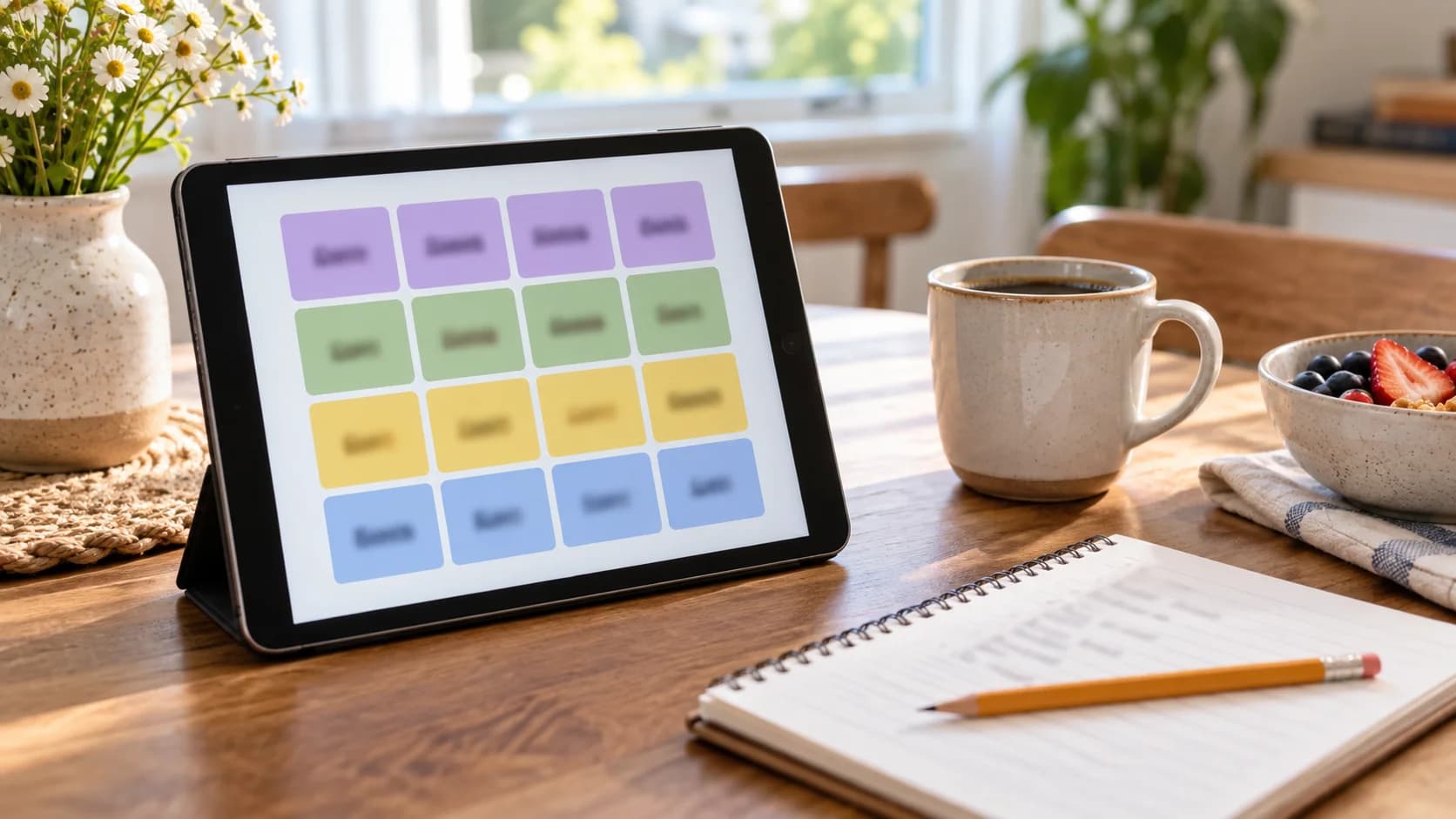
The official New York Times help page describes Connections as a word game where players look for themes between 16 words, sorting them into four groups of four, with color-coded difficulty from yellow to purple NYT Connections Help. That structure is easy to explain but hard to master, which is exactly the sweet spot for a daily puzzle. It gives casual players a way in and experienced solvers a reason to argue with the purple group.
Why The Format Works
Connections works because it is a pattern-recognition game disguised as a vocabulary game. The player is not simply asking what each word means. They are asking which four words belong together, which tempting group is a trap, and which category title the editor might have intended. A word can point toward music, sports, food, slang, prefixes, suffixes, sounds, brands, or phrases. The tension comes from uncertainty.
The official help page says each puzzle has exactly one solution and is meant to be tricky because words can appear to fit into multiple categories NYT Connections Help. That design principle is why the game creates so much conversation. Losing rarely feels like not knowing words. It often feels like seeing the wrong connection first.
The Four-Color Difficulty System
The color system is part of the game’s genius. Yellow is usually the most approachable group, while purple is usually the trickiest. That does more than label difficulty. It gives players a solving map. Many people hunt for the obvious group first, then use the remaining words to search for stranger categories. Others hold back an obvious set because they suspect a trap. The colors turn a small puzzle into a miniature strategy session.
This tiered system also makes post-game discussion easier. Players can say they found yellow immediately, missed blue, or got stuck on purple, and other solvers understand the emotional shape of that result. The puzzle becomes shareable without needing to spoil every answer. That social layer is part of why daily word games travel so well across group chats and social feeds.
Why One Puzzle Per Day Helps
The daily limit is not a weakness. It is a retention design choice. A limitless game can become background noise. A single daily puzzle creates anticipation, scarcity, and routine. The official help page says the daily Connections game is released at midnight in a player’s timezone NYT Connections Help. That makes it fit naturally into mornings, commutes, breaks, and bedtime routines.
The limit also makes the puzzle feel communal. Millions of people may be looking at the same board on the same day, but only for that day. That shared timing is hard for most apps to recreate. It is why daily puzzle discourse often feels livelier than discussion around games with endless levels. Everyone is stuck on the same thing at roughly the same time.
Archives Changed The Habit
Archives add a second mode of play. Instead of only solving today’s puzzle, subscribers can go back through older boards and treat the game more like a library. The NYT help page says the Connections archive lets All Access and Games subscribers play puzzles from as far back as June 12, 2023, with archived puzzle progress tracked separately from daily streaks NYT Connections Help.
Independent archive analysis also shows how large the body of puzzles has become. Solve Word Games listed 1,186 published Connections puzzles through September 9, 2026, with each completed puzzle contributing one yellow, green, blue, and purple group Solve Word Games archive statistics. That kind of archive creates strategy opportunities. Players can study recurring structures, common traps, and category patterns without waiting for tomorrow.
The Purple Group Is The Conversation Engine
The purple group tends to produce the strongest reactions because it is where wordplay gets weird. It may involve missing letters, hidden phrases, homophones, shared endings, cultural references, or a category that seems obvious only after the reveal. A good purple group should feel unfair for about three seconds, then inevitable. That emotional swing is part of the game’s charm.
Guides that explain Connections often focus on tier patterns because players want to improve without simply reading the answer. HintSheet’s 2026 guide describes the puzzle around sixteen words, four groups, four mistakes, and tiered difficulty, with special attention to how purple-group tricks work HintSheet Connections guide. That is useful because the game rewards method as much as vocabulary. Good solvers learn to pause before submitting the first plausible group.
How To Get Better Without Spoilers
The best Connections strategy starts with patience. Scan all sixteen words before selecting anything. Write down possible categories, then look for words that could belong to more than one set. If four words seem too easy, ask whether one of them could be bait. If you have three strong words but cannot find a fourth, the category may be wrong. When stuck, sort by word type: nouns, verbs, brands, phrases, sounds, prefixes, suffixes, and pop-culture references.
It also helps to solve from both ends. Find the easiest group to reduce clutter, but keep an eye out for the strangest relationship on the board. Purple groups often become easier when the obvious categories are removed. Avoid burning guesses just to test a hunch unless you understand why the four words belong together. Four mistakes disappear quickly.
Why Daily Word Games Still Matter
Connections sits inside a broader daily-game habit that includes word, logic, and number puzzles. These games survive because they are small commitments with clear endings. They do not ask for an entire evening. They give players a quick moment of focus, a shareable result, and a sense of improvement over time. In a noisy app environment, that restraint is powerful.
For publishers, the lesson is bigger than one puzzle. Daily games can create loyalty without overwhelming users. They build return visits, subscriptions, newsletters, communities, and search demand around hints, strategy, archives, and explainers. For readers, the appeal is simpler: a good daily puzzle makes the internet feel a little more deliberate.
Bottom Line
Connections works because it is compact, clever, and social. It gives players sixteen words, four groups, four mistakes, and enough ambiguity to make every solve feel personal. The rules are simple enough for newcomers, but the editorial choices keep experienced players guessing.
The daily word-game boom is not only about puzzles. It is about ritual. Connections gives people a small problem to solve, a result to compare, and a reason to come back tomorrow. That is a very modern kind of entertainment: brief, shared, and surprisingly sticky.
Sources
- Connections
The New York Times Help Center | Checked
- Connections Archive Statistics
Solve Word Games | Checked
- NYT Connections: Rules, The Four Difficulty Tiers, And A Method For The Purple Group
HintSheet | Published | Checked
Editorial disclosure
This independent word-game article was written in Codex for editorial review using cited game help and puzzle-analysis sources. It is not affiliated with, sponsored by, or endorsed by The New York Times.