The Short Answer
A good family screen-time plan in 2026 is not only a timer. It is a set of household habits that protect sleep, schoolwork, safety, movement, relationships, and emotional regulation. Families need rules that children understand, parents can enforce, and daily life can survive. A perfect plan that collapses after two days is less useful than a modest plan that holds.
The American Academy of Pediatrics recommends creating a family media plan and focusing on healthy routines, content quality, communication, and balance rather than treating every minute of screen time as the same AAP Family Media Plan. Pew Research Center has found that many U.S. teens are online almost constantly, and that smartphones and social media are deeply embedded in teen life Pew teens and technology. That means families need practical boundaries, not panic.
Start With Nonnegotiables
The easiest way to build a screen plan is to protect the essentials first. Sleep comes first. Devices should not crowd out bedtime, and charging phones outside bedrooms can help. Schoolwork comes next, with clear rules about when screens are tools and when they are distractions. Meals, family conversations, physical activity, and face-to-face friendships also need protected space.
This approach avoids endless arguments about every app. Instead of debating whether a child has reached a daily number, families can ask whether the essentials are protected. If sleep, homework, chores, movement, and kindness are breaking down, the plan needs tightening. If those foundations are stable, screen rules can be more flexible.
Not All Screen Time Is Equal
A video call with grandparents, a school research project, a coding lesson, a movie night, endless short videos, and late-night group chat drama should not be treated as identical. The content, context, timing, and child’s response matter. Some screen time builds connection or learning. Some drains attention, raises stress, or disrupts sleep.
The AAP’s family media guidance encourages families to think about what media is used for, where it fits in the day, and how it affects healthy routines AAP Family Media Plan. That framing is useful because it lets parents move beyond one blunt limit. The question becomes: what is this screen doing in our home right now?
Make Rules Visible
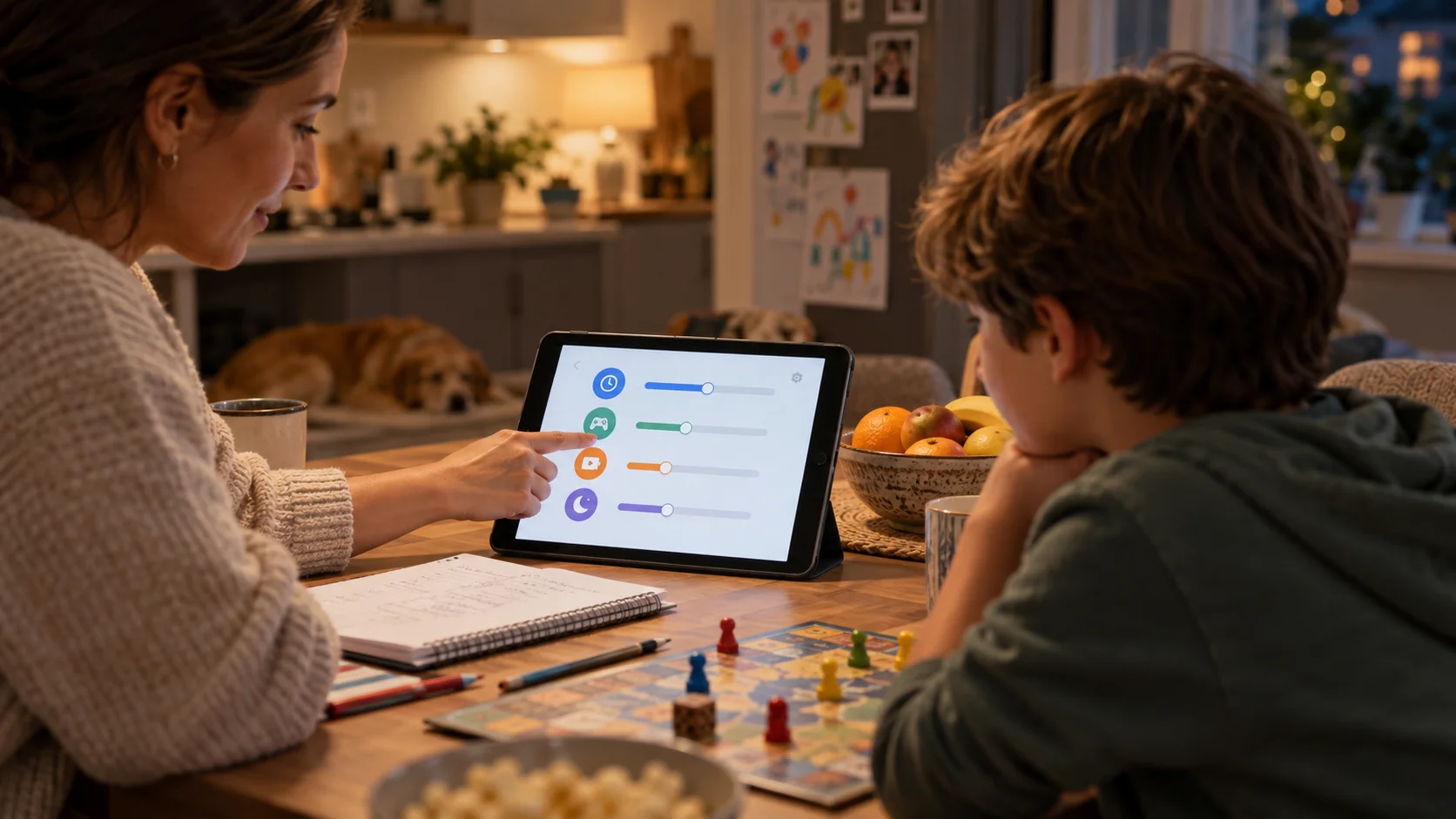
Children follow rules better when they are concrete. A family plan can include device-free meals, no phones in bedrooms overnight, homework-first afternoons, app limits on school nights, parent approval for new apps, public-first video calls for younger children, and a calm process for asking for exceptions. The rules should be written down and revisited as children grow.
Parents should also define consequences before conflict starts. If a rule is broken, what happens? Losing a device for a month may be too extreme to enforce consistently. A shorter, predictable consequence is often better. Consistency matters more than drama.
Talk About Safety Early
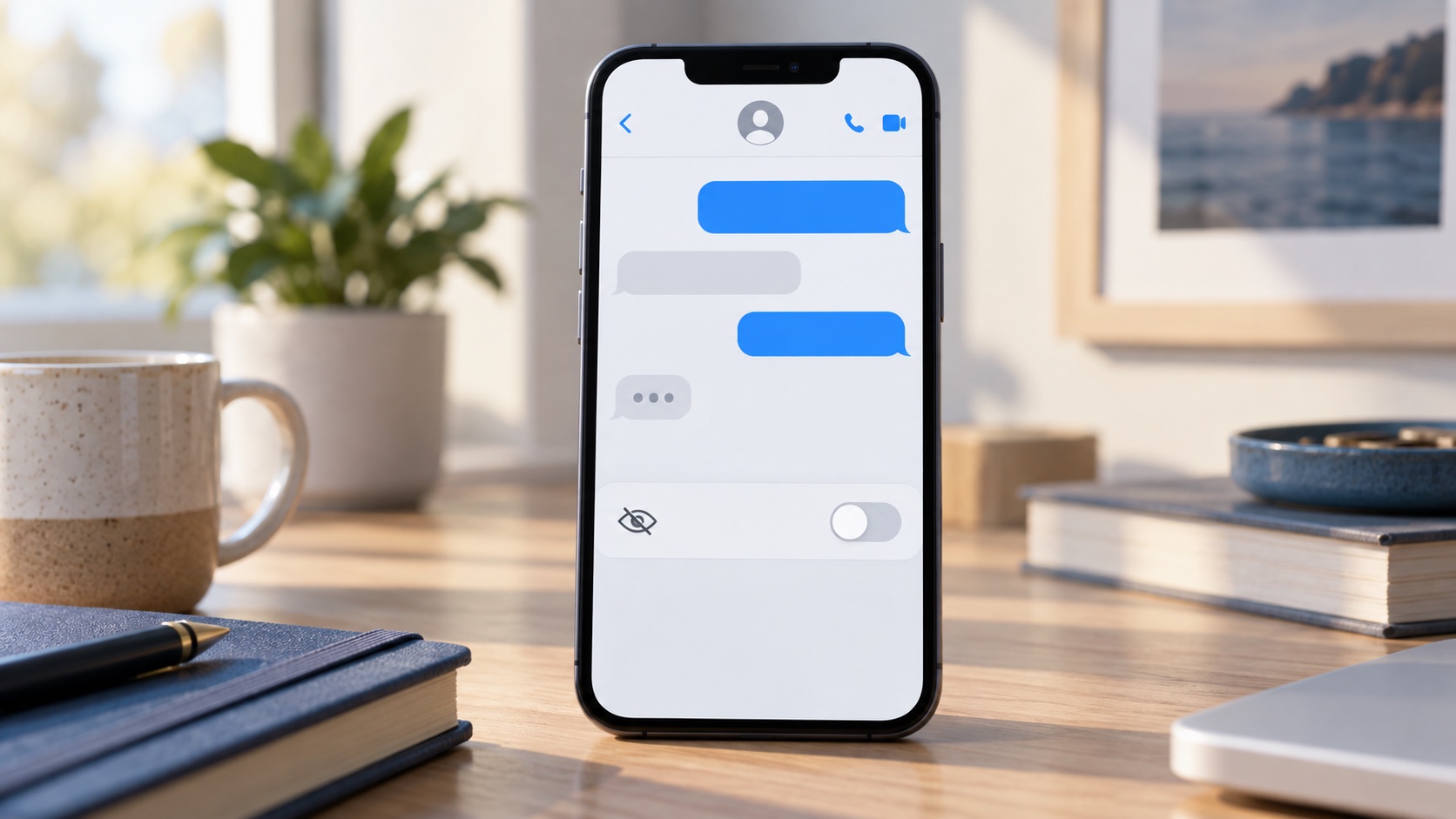
Screen-time rules should include safety conversations. Children need to know not to share private information, location, passwords, school details, private photos, or payment details. They should know how to block, report, and ask for help without fearing an automatic explosion from adults. If a child believes honesty will only lead to punishment, they may hide problems.
Pew’s research shows that social media and smartphones are common parts of teen life, which means safety cannot be handled as a one-time lecture Pew teens and technology. Families should revisit scams, impersonation, cyberbullying, group chat pressure, image sharing, and recommendation algorithms regularly. Keep the door open.
Model The Rule Yourself
Children notice adult phone habits. A parent cannot credibly demand device-free dinner while checking email at the table every night. Modeling does not mean adults must be perfect. It means naming the same standards: I am putting my phone away because this conversation matters, or I am using my phone for directions and then it goes back in my bag.
Family rules work better when they apply to the household, not only children. Adults may need exceptions for work, caregiving, or emergencies, but those exceptions should be explained. The point is not pretending adults and children have identical responsibilities. It is showing that technology boundaries are a family value.
Use Tools, But Do Not Outsource Parenting
Parental controls can help enforce bedtime, app limits, purchase approvals, and content restrictions. They are useful guardrails, especially for younger children. But controls are not a replacement for conversation. Children eventually encounter devices outside the home, school networks, friends’ phones, and new apps. They need judgment as well as restrictions.
A healthy plan combines tools with explanation. Why is this app limited? Why are private messages different from public videos? Why does sleep matter? Why do some games make stopping hard? When children understand the reason, they are more likely to internalize the rule over time.
Adjust By Age And Temperament
A preschooler, a ten-year-old, and a sixteen-year-old need different plans. Younger children need more direct limits and co-viewing. Older children need more privacy, responsibility, and conversations about relationships, reputation, school pressure, and independence. Some children also react more strongly to certain games, videos, or social apps, so the plan should fit the child, not only the age.
The best family plans are reviewed every few months. If a rule is causing constant conflict, ask whether it is unclear, unrealistic, or addressing the wrong problem. If a child is doing well, gradually adding responsibility can teach self-regulation. The goal is not permanent control. It is growing independence.
Try A Weekday Reset
Families who feel overwhelmed can start with a five-day reset rather than rewriting every rule at once. Pick one school week and protect four anchors: devices charge outside bedrooms, no screens during meals, homework comes before entertainment, and one shared offline activity happens each evening. Keep the reset short enough that everyone can try it without feeling trapped.
At the end of the week, ask what improved and what caused friction. Did mornings feel easier? Did bedtime improve? Was homework calmer? Did anyone feel cut off from friends? Use those answers to adjust the plan. A family media plan works best when it becomes a living agreement, not a poster no one follows.
Bottom Line
Family screen-time planning in 2026 is about balance, safety, and consistency. The healthiest plans protect sleep, school, movement, relationships, and emotional wellbeing. They also recognize that screens can be creative, social, educational, and fun when used with boundaries.
Start small: device-free meals, overnight charging outside bedrooms, clear app rules, regular safety conversations, and adults modeling the habits they expect. A family media plan does not need to be perfect. It needs to be clear enough to live with.
Sources
- Family Media Plan
American Academy of Pediatrics / HealthyChildren.org | Checked
- Teens, Social Media and Technology 2024
Pew Research Center | Published | Checked
- Kids and Tech: Tips for Parents in the Digital Age
American Academy of Pediatrics / HealthyChildren.org | Checked
Editorial disclosure
This independent family and parenting article was written in Codex for editorial review using cited pediatric and research sources. It is general information, not medical or mental-health advice.