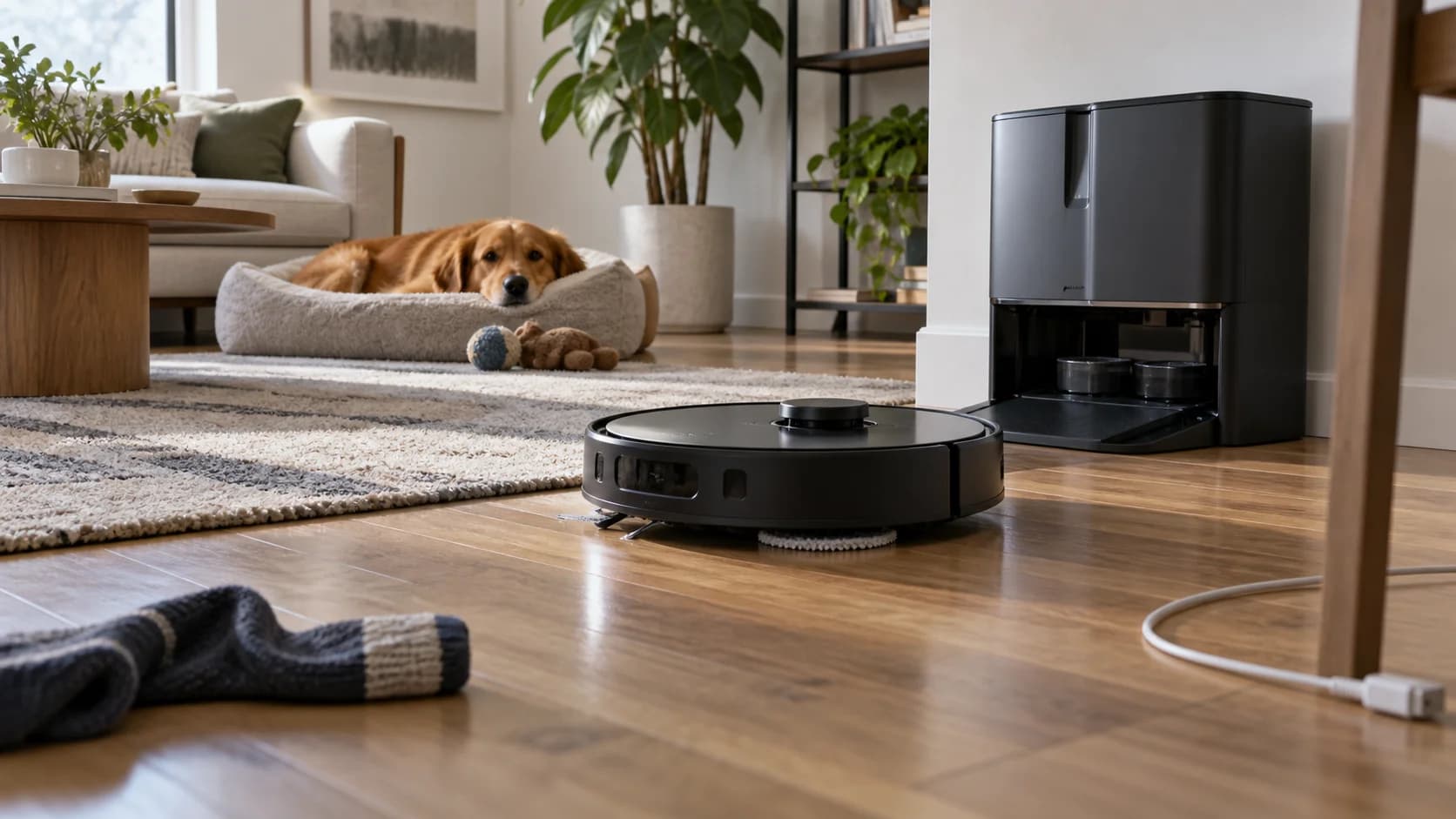
The Short Answer
The best robot vacuum in 2026 is not simply the model with the biggest suction number. The real value comes from whether it can navigate your actual home, avoid objects you actually leave on the floor, handle pet hair without constant brush cleaning, mop without soaking rugs, and return to a dock that does enough maintenance to keep the robot useful. A cheaper robot that needs daily rescue can become more work than vacuuming yourself.
Robot vacuums have become small home-cleaning systems. Premium models now combine vacuuming, mopping, self-emptying, mop washing, hot-air drying, obstacle recognition, room maps, and voice or app routines. That is exciting, but also confusing. A shopper comparing robot vacuums in 2026 should look past headline specs and ask a simpler question: which maintenance tasks will this machine remove, and which new tasks will it add?
Why The Category Is Changing Fast
Recent robot vacuum launches show where the market is going. iRobot's Roomba Max 705 Combo product page describes a robot with a self-cleaning roller mop, AutoWash dock, heated roller drying, auto-emptying, AI object recognition, LiDAR mapping, and voice assistant support. Roborock's Saros 10R page highlights a slim body, 3D navigation, anti-tangle brushes, a multifunction dock, hot-water mop washing, and Matter smart-home support.
IFA 2026 reporting also showed the category stretching into concept territory. The Verge covered iRobot's Roomba Duo concept, a larger system that imagines one robot deploying a smaller cleaner for hard-to-reach spaces. Concept products do not always become practical household buys, but they reveal the direction: robot vacuums are moving from simple floor sweepers toward autonomous cleaning platforms.
Suction Numbers Are Only Part Of Cleaning
Suction matters, especially on rugs, pet hair, sand, crumbs, and floor edges. But suction numbers can be hard to compare because brands measure and market them differently. Brush design, airflow path, seal against the floor, wheel traction, edge brushes, bin design, and cleaning pattern can all affect real performance. A robot with a strong motor can still leave debris behind if it cannot reach corners or if hair wraps around the brush after two runs.
The better approach is to match cleaning hardware to your floor. Homes with mostly hard floors may benefit more from mopping quality, edge cleaning, and obstacle detection. Homes with carpets need strong pickup, carpet detection, and a mop-lift or mop-removal system that keeps fabric dry. Pet homes should prioritize anti-tangle brushes, object avoidance, larger dust capacity, and docks that do not become smelly after repeated wet-mop cycles.
Mopping Is The Feature To Study Closely
Robot mopping has improved, but it is still not the same as a person scrubbing a sticky spill with pressure and judgment. The best systems now use spinning pads, roller mops, extending mop arms, heated water, or repeat passes to improve contact with the floor. iRobot says the Roomba Max 705 Combo uses a PowerSpin roller mop with edge cleaning and a protective cover intended to keep carpets dry. Roborock describes hot-water washing and dock self-cleaning for the Saros 10R.
The shopper question is not whether a robot mops. It is how the robot handles dirty mop pads, rugs, edges, thresholds, dried spills, and mixed flooring. If your kitchen has stubborn cooking residue, look for stronger mop pressure, warm-water or hot-water maintenance, and the ability to send the robot back for a second pass. If your home has many rugs, carpet protection becomes more important than a dramatic mopping claim.
Obstacle Avoidance Saves Real Time
Obstacle avoidance is one of the most practical upgrades because homes are rarely showroom-empty. Cables, socks, toys, pet bowls, chair legs, charging cords, shoes, and thresholds can derail older robots. Roborock's Saros 10R page emphasizes 3D Time-of-Flight sensing and recognition of small obstacles. iRobot's Roomba Max 705 Combo page highlights PrecisionVision AI technology for identifying items such as cords, socks, and pet waste.
This feature matters most in busy households. A robot that requires you to pre-clean every room before it runs may still be useful, but it loses the point of automation. Strong obstacle detection lets you schedule cleanups with less anxiety. It also reduces the risk of dragging a cable, smearing a mess, or trapping the robot under furniture. For many people, reliable avoidance is more valuable than a small increase in suction.
The Dock Can Make Or Break The Purchase
The dock is where premium robot vacuums justify their price. A good dock can empty dust, wash mops, refill water, dry mop pads, dispense solution, and reduce the number of times you handle dirty parts. A bad dock can be bulky, loud, hard to clean, or unpleasant when damp components are not dried well. Before buying, check dock dimensions and decide where it will live. Many people underestimate how much space a full-service dock needs.
Maintenance claims also need context. A dock may advertise weeks of hands-free cleaning, but that depends on floor size, pet hair, dust levels, water use, and how often the robot runs. You may still need to replace bags, clean filters, rinse dock trays, remove trapped hair, and descale or refresh water systems. The right dock reduces chores; it does not eliminate ownership.
Privacy And Smart Home Fit
Robot vacuums are mapping devices, so privacy should be part of the buying decision. Some models use cameras, LiDAR, depth sensors, microphones, cloud processing, or app accounts. Roborock says the Saros 10R has privacy-focused measures and references security certification on its product page. Shoppers should still read privacy settings, check whether maps and images are stored, and decide whether they are comfortable with camera-based navigation inside the home.
Smart-home compatibility can also matter. Matter support, voice assistants, app routines, room-specific cleaning, and widgets make robots easier to use. But compatibility is only useful if it works with your devices. Check whether the robot supports your phone, smart speaker, Wi-Fi band, and preferred assistant. Some robots still require 2.4GHz Wi-Fi, which can surprise buyers with modern mesh networks.
The Bottom Line
A robot vacuum is worth buying in 2026 if it removes more work than it creates. Prioritize navigation, obstacle avoidance, brush maintenance, mopping behavior, dock quality, and floor-type fit before comparing giant suction claims. Pet owners should be especially careful about anti-tangle systems and object detection. Homes with rugs should focus on carpet protection and mop lifting. Small apartments may not need a massive dock at all.
The smartest purchase is the robot that fits your mess pattern. If crumbs, pet hair, dust, and daily kitchen spills are constant, a good robot vacuum-mop can keep the home cleaner between deeper manual cleans. If your floors are cluttered and you will not maintain the dock, even a flagship model can become an expensive obstacle. Automation works best when it fits the household, not the spec sheet.
Sources
- Roomba Max 705 Combo robot plus AutoWash dock
iRobot | Checked
- Saros 10R
Roborock | Checked
- iRobot unveils the Roomba Duo
The Verge | Published | Checked
- The best tech and gadgets announced at IFA 2026
The Verge | Published | Checked
Editorial disclosure
This article was drafted by The Daily Unfold editorial desk using reviewed public product information and market reporting. It is independent shopping guidance, not sponsored content, and it does not claim hands-on testing unless explicitly stated.