The Short Answer
Samsung's September 2026 appliance update is notable because it treats major home appliances more like phones and laptops. Samsung says select refrigerators and laundry appliances are receiving Tizen OS 10.0 updates with newer Bixby, expanded AI features, and refreshed interfaces Samsung September appliance update.
That matters for smart home buyers because appliances are expensive, long-lived products. If useful software arrives years after purchase, the value of a refrigerator or washer can improve over time. If updates are confusing, limited, or dependent on accounts and markets, the smart features can also become another thing owners need to manage.
What Samsung Announced
Samsung says the Tizen OS 10.0 update begins rolling out in phases from September 2026 to select refrigerators and laundry appliances, with timing, features, and availability varying by product, model year, and market Samsung September appliance update. The company frames the update as a way to keep appliances useful and current during ownership.
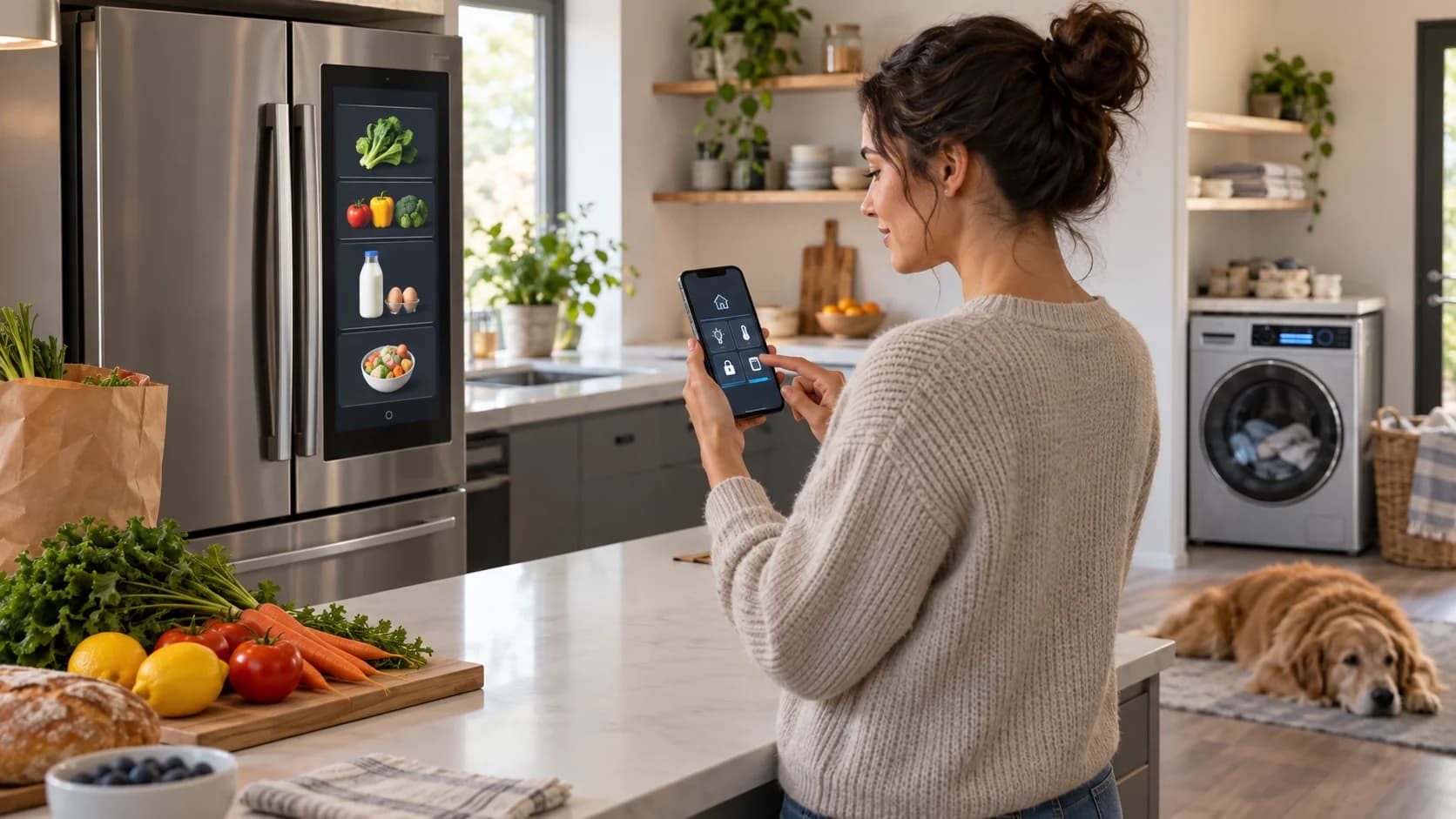
The update includes AI Vision improvements for certain Family Hub refrigerators, broader food recognition, Now Brief and What's for Today features, more natural Bixby interactions for laundry appliances, and refreshed interfaces for models with larger screens. In plain terms, Samsung wants the kitchen and laundry room to feel more connected to the rest of the digital home.
Why The Refrigerator Update Matters
The refrigerator is the clearest example because it sits at the center of food planning. Earlier in 2026, Samsung said a major Family Hub update would expand AI Vision food recognition, improve Bixby voice control, add personalized daily widgets, and help users track food items Samsung Family Hub AI update.
The promise is simple: if the fridge understands more of what is inside, it can help with meal planning, replenishment, and food management. The limitation is also simple: recognition may vary, manual correction may still be needed, and features can depend on model, region, accounts, language, and connectivity. Smart does not always mean effortless.
Laundry Is About Convenience, Not Hype
Laundry AI is less glamorous than a camera-equipped fridge, but it may be more immediately useful. Samsung says newer Bixby interactions can help users ask practical questions such as when laundry will finish, while refreshed screens and Easy Mode can simplify controls on supported models Samsung September appliance update.
That is the right kind of smart appliance feature: fewer taps, clearer status, and less confusion. Most people do not need a washer to feel futuristic. They need it to be predictable, clear, and easy to use when they are tired. If AI reduces friction rather than adding menus, it earns its place.
The Ownership Question
The bigger trend is ownership. A refrigerator, washer, or dryer is usually expected to last much longer than a phone. When manufacturers add software features after purchase, buyers need to ask how long those updates will continue, which models qualify, what happens if cloud features change, and whether the appliance remains good without the smart layer.
This is where buyers should be practical. A smart appliance should still be a good appliance if the screen is ignored. Cooling, cleaning, reliability, warranty, repair access, capacity, energy use, and basic controls remain more important than novelty. Software is a bonus when it improves daily life. It is a liability when it hides core functions behind complicated settings.
The software promise also changes resale and hand-me-down value. A connected appliance that keeps receiving useful updates may age better than a static one. But if updates depend on one account, one region, or one discontinued cloud service, the next owner may inherit confusion. Buyers should keep manuals, account transfer steps, and model numbers organized from the start.
Privacy And Accounts Matter
Connected appliances may involve cameras, voice assistants, food lists, calendars, account linking, and usage patterns. Samsung's footnotes note that some features require Wi-Fi, accounts, supported languages, app settings, and model eligibility Samsung September appliance update. Buyers should treat those requirements as part of the product.
Before enabling everything, owners should check what data is being collected, which accounts are connected, who in the household can access the screen, and whether guests or children can trigger functions. Smart home convenience is best when the people living with it understand the tradeoffs.
A simple setup checklist can help. Use strong account security, review connected services, turn off features nobody uses, and teach household members which commands are available. Smart home problems often come from unclear defaults rather than bad hardware, so the first hour of setup matters.
Who Should Care Most
These updates matter most for people who already own eligible Samsung appliances, people shopping for long-lasting smart kitchen products, and households that genuinely use meal planning or connected routines. A family that wastes food because nobody knows what is in the fridge may benefit more than someone who shops daily and cooks simply.
The updates also matter for the broader smart home market. If appliance makers train buyers to expect meaningful software improvements, product comparisons will change. Buyers may start asking not only what a washer does today, but also what the maker has promised to support in three or five years.
Retailers and reviewers should adjust too. A smart appliance review should not stop at first impressions. It should check update history, offline usefulness, privacy settings, repair expectations, and whether the screen or app makes normal tasks faster. That is the difference between a helpful smart feature and a showroom demo.
Bottom Line
Samsung's AI appliance updates are a useful sign of where the smart home is heading. The best version of this trend gives existing owners better features without buying new hardware. The worst version makes appliances feel dependent on subscriptions, settings, and cloud services.
For now, the sensible approach is to evaluate smart appliances in two layers. First, make sure the hardware is excellent. Second, decide whether the software will actually help your household. If both answers are yes, AI appliances start to look less like gimmicks and more like long-term home platforms.
The buyer's rule is simple: never buy a weak appliance for smart features, but do give credit to strong hardware that keeps improving after purchase and makes ordinary household chores genuinely easier daily.
Sources
- Samsung Enhances Long-Term Value of Refrigerators and Laundry Appliances With AI-Focused Software Updates
Samsung Global Newsroom | Published | Checked
- Samsung Expands AI Capabilities of Bespoke AI Refrigerator Family Hub With Major Updates
Samsung Global Newsroom | Published | Checked
Editorial disclosure
This independent smart home explainer was written in Codex for editorial review using cited Samsung sources. It is not sponsored by Samsung or any appliance retailer.