The Short Answer
The best kitchen upgrades in 2026 are the ones that solve daily friction: faster weeknight cooking, easier cleanup, lower energy waste, better food storage, and less decision fatigue. That means induction cooking, reliable air frying, smarter ovens, compact high-use appliances, and energy-efficient major appliances are more useful than novelty gadgets. A smart kitchen does not need every device connected to Wi-Fi. It needs appliances that make ordinary cooking easier.
The strongest buying strategy is to upgrade around routines. If you cook fresh meals most nights, an induction range or cooktop may change your kitchen more than a countertop gadget. If you mostly reheat, crisp, and meal-prep, an air fryer or oven with air-fry mode may earn its space. If food waste is your problem, refrigerator organization and inventory features may matter more than another blender. The smartest appliance is the one that fixes the bottleneck you actually feel.
Why Kitchen Appliances Feel Different In 2026
Appliance brands are leaning into convenience, energy efficiency, and assistance. GE Appliances' 2026 top products page highlights ideas such as refrigerator shopping assistance, smart wall ovens with cooking assistance, and smaller specialty appliances. Consumer Reports' kitchen appliances hub also shows how crowded the buying landscape has become, with air fryers, blenders, ranges, dishwashers, coffee makers, cooktops, and more competing for attention.
That crowding is why shoppers need a filter. A new appliance can be genuinely useful, but kitchen marketing often turns small conveniences into must-have language. The better question is not whether a feature sounds futuristic. It is whether the feature saves time, reduces cleanup, improves cooking consistency, lowers energy use, or helps you avoid wasted groceries. If it does none of those things, it is decoration in appliance form.
Induction Is The Big Cooking Upgrade
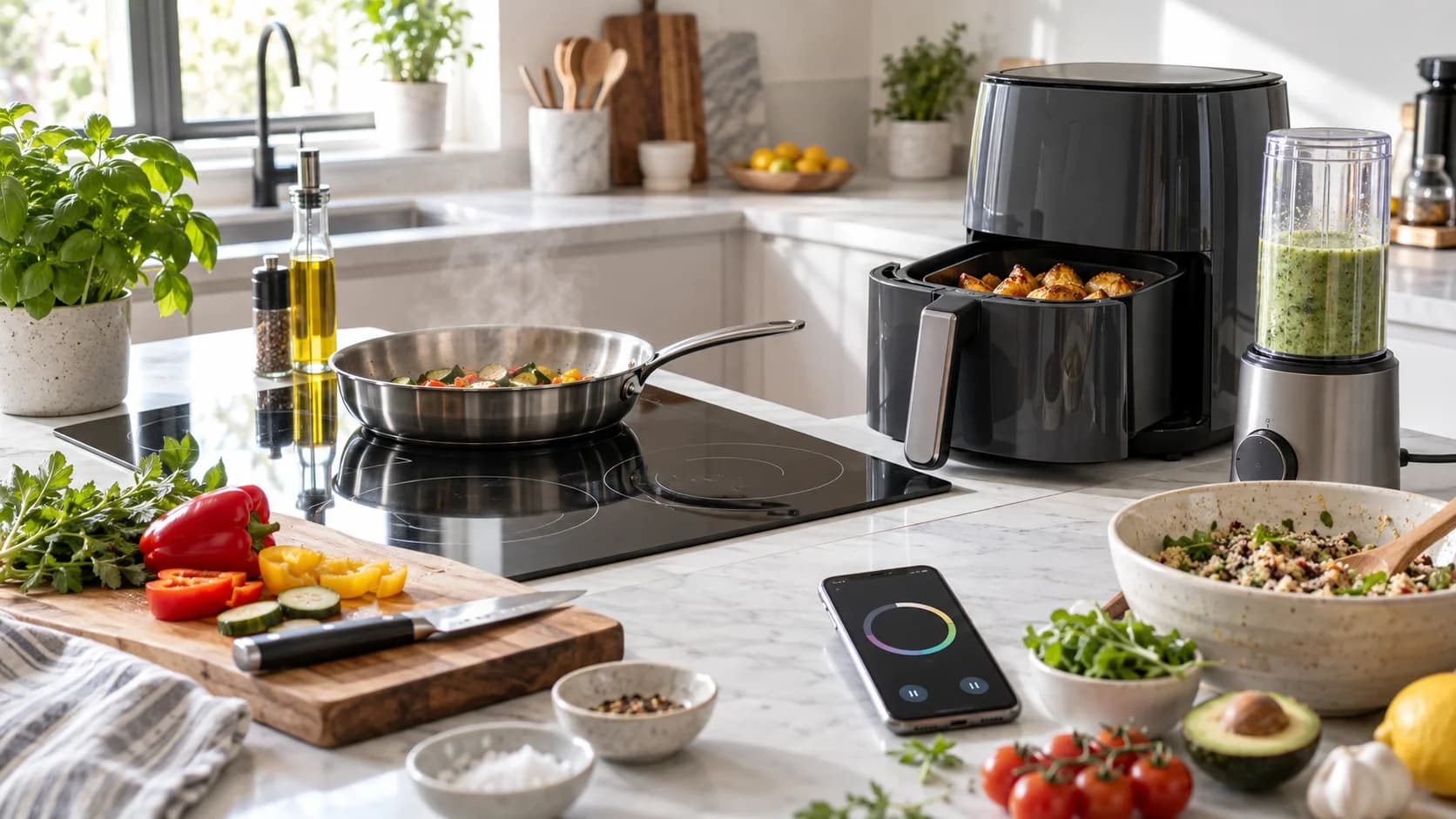
Induction is one of the most meaningful kitchen upgrades because it changes how heat reaches the pan. The U.S. Department of Energy explains in its induction switch guide that induction uses an electromagnetic field to heat compatible cookware directly. DOE also notes that induction can be much more efficient than gas and somewhat more efficient than conventional smooth-top electric cooking. For home cooks, the lived benefit is fast heating, responsive control, and easier cleanup.
Induction does require compatible cookware. A simple magnet test helps: if a magnet sticks to the bottom of the pan, it is usually induction-ready. GE's induction cooking page explains the same basic idea: the pan heats directly through magnetic energy rather than relying on an open flame or traditional coil. That directness is why induction can feel quick and precise. It is also why spills are less likely to burn onto the surrounding surface.
Air Fry Is Useful When It Replaces A Habit
Air fryers remain popular because they fit a real pattern: people want crisp food quickly without preheating a full oven. But the category can become redundant. If you already own a range or wall oven with a strong no-preheat air-fry mode, a separate countertop basket may not be necessary. GE's Profile cooking appliances page describes no-preheat air fry and in-oven air-fry features across some appliances, which shows how the function is moving from countertop-only gadgets into larger ovens.
The best air-fry setup depends on household size. A single person or couple may love a compact basket because it is fast and easy to clean. A family may prefer an oven mode because it handles larger trays. The shopper mistake is buying both without a plan. If the countertop appliance will live out and be used several times a week, it can be worth it. If it will be hidden in a cabinet behind heavier items, the built-in oven function may be enough.
Smart Features Need A Job
Connected appliances can be useful when they reduce uncertainty. A phone alert that the oven is preheated, a camera that lets you check food without opening the door, a refrigerator feature that supports grocery planning, or a dishwasher cycle notification can help busy households. But smart features should not be treated as automatic value. Some require apps, accounts, updates, and Wi-Fi reliability. Some are exciting for two weeks and ignored after that.
GE's 2026 appliance announcements point toward cooking assistance and grocery-planning features, which are stronger use cases than vague connectivity. A smarter oven is helpful if it improves cooking confidence. A smarter refrigerator is helpful if it reduces repeated grocery trips or wasted ingredients. A smart appliance that only lets you turn something on from the couch may be less meaningful. The best connected feature is one that removes a real household question.
Energy Labels Still Matter
Energy efficiency is not as flashy as a touchscreen, but it can matter more over the life of an appliance. ENERGY STAR explains on its How ENERGY STAR Works page that qualifying products are independently certified to meet energy-efficiency standards. For major appliances such as refrigerators, dishwashers, and some cooking products, the label helps shoppers compare operating costs and environmental impact beyond the purchase price.
The lowest sale price is not always the lowest total cost. A refrigerator, dishwasher, or range may stay in your home for years. Energy use, repairs, reliability, installation, and maintenance all matter. Before buying a major appliance, compare the energy label, warranty, dimensions, delivery requirements, and whether the appliance needs special electrical work. A cheap upgrade becomes expensive if it does not fit the space, trips a circuit, or requires unexpected installation changes.
What To Buy First
Start with the appliance that blocks the most meals. If your stove is slow, hard to clean, or uneven, prioritize the cooktop or range. If your refrigerator causes food waste because you cannot see or organize ingredients, upgrade storage first. If dinner is usually frozen, roasted, or reheated, an air fryer or better oven mode may be the fastest quality-of-life change. If smoothies, sauces, soups, or prep work are central to your week, a durable blender or food processor may matter more than a smart oven.
Countertop appliances should earn their footprint. A compact blender, coffee maker, air fryer, toaster oven, or food processor can be excellent when used constantly. But kitchens fill up fast. Before buying, decide where the appliance will live, how it will be cleaned, whether replacement parts are available, and what old tool it replaces. The best kitchen counter has fewer objects that do more work.
The Bottom Line
The smarter kitchen in 2026 is not about collecting gadgets. It is about choosing appliances that make food easier to cook, easier to clean up, easier to store, and easier to plan. Induction is one of the clearest performance upgrades. Air fry is worthwhile when it replaces a real cooking habit. Connected features matter when they answer practical questions. Energy labels matter because appliances live with you long after checkout.
Buy slowly, measure carefully, and upgrade around the routine that frustrates you most. That approach may sound less exciting than a full kitchen overhaul, but it is how shoppers avoid expensive clutter. The best kitchen appliance is not the trendiest one. It is the one that gets used on a tired Tuesday and still feels like a good decision.
Sources
- Kitchen Appliances
Consumer Reports | Checked
- Making the Switch to Induction Stoves or Cooktops
U.S. Department of Energy | Published | Checked
- Induction Cooking
GE Appliances | Checked
- GE Profile Cooking Appliances
GE Appliances | Checked
- How ENERGY STAR Works
ENERGY STAR | Checked
- 2026: Top 5 Products for the Home
GE Appliances Pressroom | Checked
Editorial disclosure
This article was drafted by The Daily Unfold editorial desk using reviewed public information from appliance, energy, and consumer sources. It is independent shopping guidance, not sponsored content, and it does not claim hands-on testing unless explicitly stated.