The Short Answer
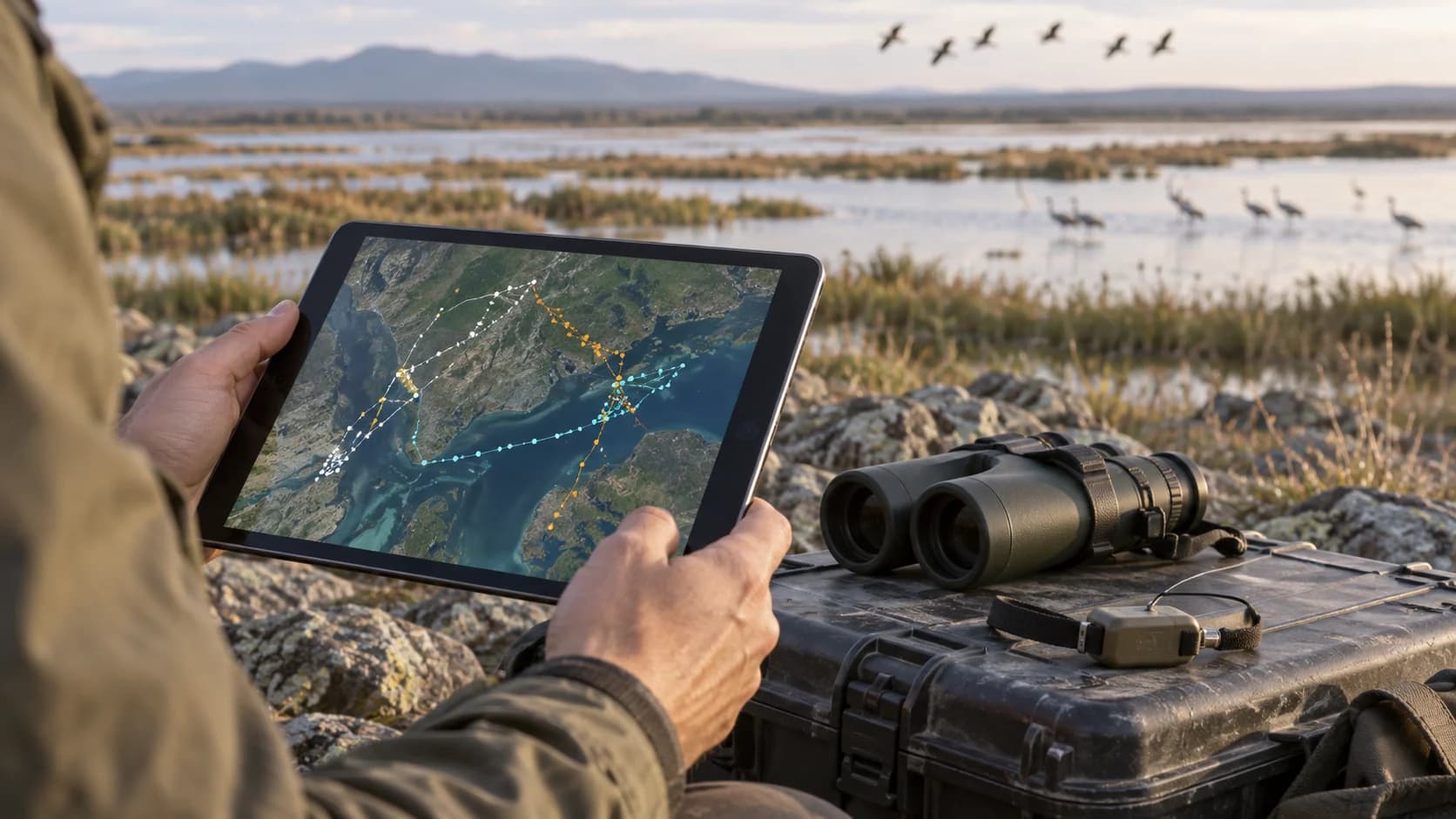
Animal tracking is becoming one of the most useful tools for understanding how wildlife responds to a changing planet. Scientists can now combine small GPS tags, satellite communications, remote sensing, and long-term ecological data to see where animals move, when migrations shift, how protected areas are used, and where disease or habitat pressure may be emerging. The result is a more dynamic picture of wildlife than a simple population count can provide.
This matters because animal movement is often an early signal. If birds migrate earlier, fish avoid warming water, mammals change calving grounds, or marine species shift feeding patterns, those movements can reveal environmental stress before people notice it in ordinary life. In 2026, the most interesting animal stories are not only about rare species. They are also about the data trails that show how living systems are adapting, struggling, or surprising scientists.
NASA's Internet Of Animals
NASA's Internet of Animals project is a clear example of this shift. The project links animal telemetry with Earth-observation data so researchers can study biodiversity, conservation, disease movement, habitat use, and climate pressure. NASA describes examples involving tuna, sharks, and frigatebirds moving in and out of a protected marine area, along with broader work to connect animal movement with remote sensing data such as temperature and vegetation changes.
The idea is powerful because it connects two kinds of evidence. A tag can show where an animal moved, while satellite data can show what the environment was like at that time. Together, those data can help answer practical questions: Are protected areas covering the places animals actually use? Are migration corridors shifting? Are species entering riskier human-wildlife conflict zones? Are disease vectors moving through new regions? Movement data turns conservation from a static map into a living timeline.
Why Movement Data Matters For Conservation
Conservation decisions often depend on knowing where animals go when people are not watching. A nesting beach, forest reserve, or marine protected area can look effective on paper while missing the corridors or feeding zones that matter most. WWF's 2026 conservation updates include a story on how wildlife movement data shapes conservation, reflecting how central movement science has become to habitat planning and protection. The more precise the movement data, the better managers can protect the places animals actually use.
Movement data also helps conservation teams avoid one-size-fits-all strategies. Two populations of the same species may behave differently depending on food, temperature, predators, fences, roads, water, or human activity. A migration route that worked for decades may become less useful after drought, wildfire, urban growth, or changing sea ice. Tracking helps reveal those differences. That can support targeted interventions, from safer road crossings to better reserve boundaries.
Climate Change Is Changing The Map
Climate pressure is one reason animal tracking has become more urgent. NOAA's educational material on animal migrations and changing climate explains that many species migrate to follow seasonal conditions, find food, and reach breeding areas, while climate change can alter cold-weather habitat and migration patterns. The science is not just about distance. It is about timing, food availability, and whether animals arrive when the environment is ready for them.
NASA has also reported on research showing that Arctic animal movement patterns are shifting in different ways as climate changes in its article on Arctic animal movement. The important point is that animals do not all respond the same way. Some move earlier, some shift range, some face mismatches with food or breeding windows, and some may be constrained by geography or human development. Tracking makes those uneven responses visible.
Disease Monitoring Is Part Of The Story
Animal movement is also connected to disease surveillance. CDC explains in its Influenza A in animals overview that many influenza A viruses circulate naturally in wild birds but can also infect other animals, including poultry, pigs, cows, cats, dogs, seals, whales, and more. That does not mean every animal movement is a public-health threat. It means movement, contact, and environment can help scientists understand how risks change.
CDC's bird flu in pets and other animals guidance also reminds pet owners to avoid contact between pets and potentially infected wild birds, sick animals, raw milk, or raw pet food. For science readers, the broader lesson is that wildlife, agriculture, pets, and people are connected. Better animal movement data can help researchers spot patterns before they become bigger problems.
Technology Is Getting Smaller And Smarter
The technology behind animal tracking has improved dramatically. Tags can be smaller, more efficient, and more capable than earlier generations. Satellite links can help researchers collect data from remote places where cellular service does not exist. Sensors can record location, depth, acceleration, temperature, and sometimes behavior. This lets scientists study species that spend much of their lives out of sight, from seabirds and sharks to large mammals and migratory fish.
There are still trade-offs. Tags must be light enough not to harm or alter behavior. Batteries limit how long some devices can report. Recapturing animals can be difficult. Data can be uneven across species and regions because some animals are easier to tag than others. Ethical handling matters. The best tracking work balances scientific value with animal welfare and local ecological knowledge.
What Readers Should Watch Next
The next wave of animal stories will likely focus on migration timing, disease interfaces, urban wildlife, marine protected areas, and climate refuges. Expect more research that combines tracking data with satellite observations, machine learning, and on-the-ground conservation work. Also expect more public visualizations, because movement maps make complex ecological changes easier to understand. A good map can show in seconds what a long report takes pages to explain.
Readers should also be careful with dramatic wildlife headlines. A single tracked animal can tell a compelling story, but it may not represent an entire species. Strong reporting should explain sample size, time period, location, uncertainty, and what the data can and cannot prove. Movement data is powerful, but it is still evidence that needs context.
The Bottom Line
Animal tracking is becoming a climate, conservation, and public-health tool because movement connects the living world to environmental change. It can reveal whether protected areas are working, whether migration timing is shifting, whether disease risks are moving, and whether animals are finding the habitats they need. That makes it one of the most important science trends to follow in 2026.
The most hopeful part is practical. Better tracking does not only produce beautiful maps. It can help people design safer corridors, protect feeding areas, manage conflict, monitor disease risk, and adapt conservation plans as conditions change. In a changing world, knowing where animals move is one step toward giving them room to survive.
Sources
- Internet of Animals
NASA | Published | Checked
- Conservation Stories
WWF | Checked
- From Pole to Shining Pole: Animal Migrations and Changing Climate
NOAA Science On a Sphere | Checked
- About Influenza A in Animals
CDC | Published | Checked
- Bird Flu in Pets and Other Animals
CDC | Published | Checked
- Arctic Animals' Movement Patterns are Shifting in Different Ways as the Climate Changes
NASA | Checked
Editorial disclosure
This article was drafted by The Daily Unfold editorial desk using reviewed public science and conservation sources. It is general science journalism and not veterinary, public-health, or wildlife-management advice.