The Short Answer
Climate change in 2026 is best understood as a present-tense systems problem. The headline numbers are stark: the World Meteorological Organization says 2015 to 2025 were the hottest eleven years on record, and 2025 was about 1.43 degrees Celsius above the 1850 to 1900 average WMO State of the Global Climate 2025. Copernicus reported that 2025 was the third warmest year on record and that the three-year average for 2023 to 2025 exceeded 1.5 degrees Celsius above the pre-industrial level Copernicus 2025 climate highlights.
Those numbers do not mean every year will be hotter than the one before it, or that the Paris Agreement threshold has been permanently crossed in the legal sense. They do mean the climate people are living in today is already different from the climate many systems were built for. Roads, drainage, insurance, food supply chains, health services, power grids, housing, and workplaces all need adaptation planning alongside emissions cuts.
Why One Year Is Not The Whole Story
Climate science looks at long-term trends, not a single hot month or one dramatic storm. That is why the eleven-year record matters. When the warmest years cluster together, it is a signal that the background climate has shifted. Natural variability still exists, but it is operating on top of a warmer baseline. Heat waves can become more dangerous, heavy rainfall can become more intense, and coastal flooding can start from higher seas.
Copernicus said the past eleven years have been the eleven warmest on record, and that 2025 was only slightly cooler than 2023 and 2024 Copernicus 2025 climate highlights. WMO’s report similarly placed recent years at the top of the observed temperature record WMO State of the Global Climate 2025. For readers, the practical takeaway is that climate risk is not waiting for a future decade. It is already shaping local decisions.
Ocean Heat Is A Core Signal
Air temperature gets most of the public attention, but ocean heat is one of the most important climate indicators. WMO reported that Earth’s energy imbalance reached the highest level in a 65-year record and that the ocean has been absorbing about eighteen times annual human energy use each year over the past two decades WMO State of the Global Climate 2025. That is a huge amount of trapped heat moving into the system that shapes weather, storms, marine ecosystems, and sea level.
Warmer oceans can intensify some storms, stress coral reefs, change fisheries, and expand marine heatwaves. They also contribute to sea-level rise because warmer water expands. The ocean can make climate change feel slower on the surface because it absorbs so much heat, but that does not make the problem smaller. It stores consequences that can continue to unfold over long periods.
Sea Level Makes Small Events Bigger
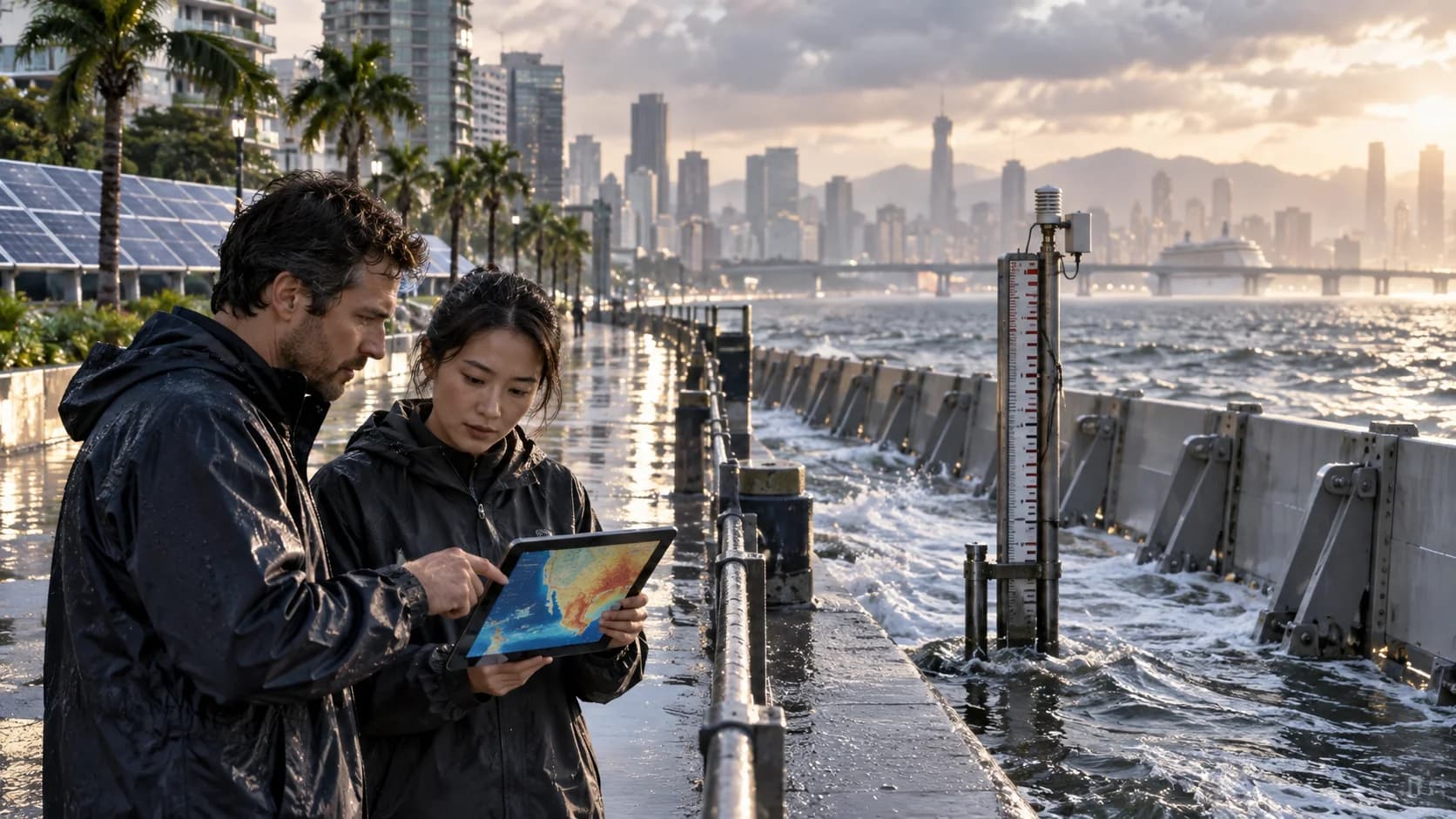
Sea-level rise changes the meaning of ordinary coastal weather. A tide, storm surge, or heavy rain event that used to be manageable can become disruptive when water starts from a higher baseline. UN-Water’s summary of WMO’s 2025 report said sea level is now about 11 centimeters higher than in 1993, increasing risks such as coastal ecosystem damage, salinization of groundwater, and flooding UN-Water WMO summary.
That is why adaptation is not only about dramatic disasters. It is about drainage maps, building codes, insurance pricing, emergency alerts, hospital access, school closures, and where new housing is built. A small increase in water level can turn a borderline event into a damaging one, especially in neighborhoods with old drainage, low elevation, or limited resources.
Extreme Weather Reveals Vulnerability
WMO’s report emphasized that extreme events such as intense heat, heavy rainfall, and tropical cyclones caused disruption and highlighted the vulnerability of interconnected economies and societies WMO State of the Global Climate 2025. The word interconnected matters. A heat wave can affect health, labor productivity, electricity demand, transport, food prices, and schools at the same time. A flood can damage homes, close roads, delay deliveries, and interrupt medical care.
The most useful climate coverage connects those dots. Readers do not only need a chart. They need to understand why a warmer planet changes everyday planning. Should a household buy flood coverage? Should a city redesign bus shelters for extreme heat? Should a business diversify suppliers? Should a school district update air-quality and heat policies? These are now mainstream planning questions.
Mitigation And Adaptation Work Together
There is a false choice in some climate conversations: either cut emissions or adapt to impacts. In reality, both are needed. Mitigation limits how much worse the problem becomes. Adaptation reduces harm from the warming that is already here and from additional warming that is likely in coming years. A city that installs shade and cooling centers still needs clean-energy planning. A business that lowers emissions still needs flood and heat resilience.
Good adaptation is specific. It depends on local hazards, age, income, housing quality, infrastructure, and access to services. For coastal areas, adaptation may mean flood barriers, wetland restoration, managed retreat, drainage upgrades, and stricter building rules. For inland areas, it may mean heat-health systems, wildfire preparation, water planning, crop changes, and grid resilience. The common thread is using climate data before the next event forces a rushed response.
What Readers Can Do With The Data
At a household level, climate data becomes useful when it changes decisions. Check flood maps, local heat plans, air-quality alerts, insurance exclusions, and emergency routes. Review whether your home has shade, ventilation, backup power options, and water protection. If you rent, document maintenance issues and ask landlords about cooling, leaks, and flood history. These steps are not a substitute for policy, but they can reduce individual risk.
At a community level, ask whether public agencies are using current climate assumptions. Are storm drains sized for today’s rainfall? Are cooling centers reachable by transit? Are schools prepared for heat and smoke days? Are older residents checked during extreme events? Are new developments built with future flood and heat conditions in mind? Climate change becomes less abstract when those questions move into budgets and planning meetings.
Bottom Line
The climate story in 2026 is not only about breaking records. It is about living in the consequences of a warmer baseline. Recent years have clustered at the top of the temperature record, oceans continue to store enormous heat, seas are higher than they were a generation ago, and extreme weather is exposing weak points in everyday systems.
The most responsible response is practical and two-sided: reduce emissions while adapting faster. Climate change is a science story, but it is also a housing story, a health story, a food story, an insurance story, and a local-government story. The numbers matter because they tell us the old assumptions are no longer enough.
Sources
- State of the Global Climate 2025
World Meteorological Organization | Published | Checked
- Copernicus: 2025 Was the Third Hottest Year on Record
Copernicus Climate Change Service | Published | Checked
- WMO State of the Global Climate 2025 Report
UN-Water | Published | Checked
Editorial disclosure
This independent climate-change article was written in Codex for editorial review using cited climate-science sources. It summarizes public research and should not be read as emergency guidance for any specific location.