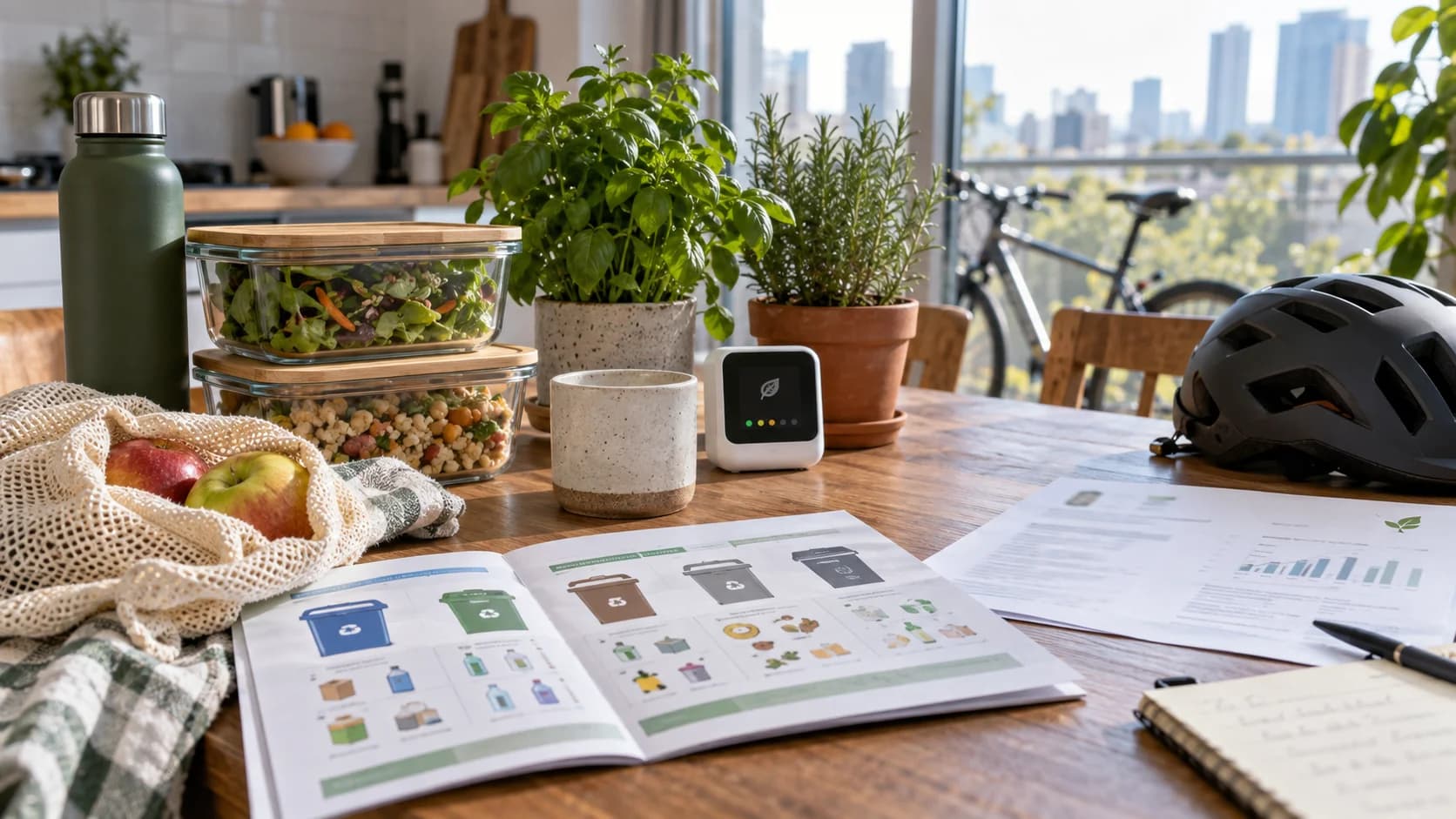
The Short Answer
Environmental action in 2026 works best when it moves beyond guilt and focuses on systems: energy, transport, food, waste, repair, buildings, water, and local policy. Individual choices matter, but they matter most when they reduce demand, support better infrastructure, and make bigger changes easier. A reusable bottle is fine. A household energy plan, lower food waste, better insulation, fewer short car trips, and support for local clean infrastructure can matter more.
UNEP’s Global Resources Outlook warned that extraction and processing of material resources are major drivers of climate change, biodiversity loss, water stress, and pollution UNEP Global Resources Outlook 2024. UNEP’s Emissions Gap Report 2025 also warned that current national climate pledges were still not enough to place the world on a 1.5 degree Celsius pathway UNEP Emissions Gap Report 2025. The practical message is that everyday choices should connect to larger systems, not distract from them.
Start With Energy At Home
Home energy is one of the clearest places where everyday action can become practical. The exact priorities depend on climate, housing type, income, and local grid mix, but the same questions help: where is energy being wasted, what can be electrified, what can be insulated, and what appliances are near replacement? Simple steps such as sealing drafts, using efficient lighting, maintaining heating and cooling systems, and choosing efficient appliances can reduce waste without changing daily life dramatically.
The best time to make bigger changes is often when something already needs repair. If a water heater, furnace, stove, dryer, or air conditioner is near the end of its life, research cleaner and more efficient options before it fails. Emergency replacements tend to lock households into whatever is available quickly. Planning creates more room for rebates, quotes, and better decisions.
Waste Is About Design, Not Just Sorting
Recycling is useful, but waste reduction starts before the bin. Buying durable products, repairing what can be repaired, choosing refillable or lower-packaging options, sharing tools, and avoiding overbuying often matter more than sorting perfectly after the fact. Waste systems vary by city, so the right answer also depends on local rules.
UNEP’s Global Waste Management Outlook 2024 described waste generation as rising and emphasized the need to prevent waste, improve collection, and shift toward circular approaches UNEP Global Waste Management Outlook 2024. For readers, the most practical habit is to ask one question before buying: what happens to this product when I am done with it? If the answer is landfill after a short life, look for a better option.
Food Choices Add Up
Food has environmental impact through land use, water, fertilizer, transport, packaging, refrigeration, and waste. The most realistic first step is reducing food waste. Plan meals around what is already in the fridge, freeze leftovers, understand date labels, and buy produce in quantities you will actually eat. Food that is thrown away wastes every resource used to grow, transport, and store it.
Diet choices are personal and cultural, but adding more plant-forward meals can reduce pressure on resources for many households. The goal does not have to be perfection. A few repeatable meals that are affordable, satisfying, and lower waste are more likely to last than a dramatic plan no one enjoys.
Transport Is A Local Question
Transportation choices depend heavily on where someone lives. Walking, cycling, public transport, carpooling, remote work, and electric vehicles are not equally available to everyone. That is why environmental advice should avoid shaming people for constraints they do not control. A household in a transit-rich city has different options from a rural family with long commutes.
The useful approach is to reduce the trips that are easiest to change first. Combine errands, replace short drives when safe, maintain tire pressure, avoid unnecessary idling, and consider transit or cycling for predictable routes. At a community level, support safer sidewalks, bike lanes, reliable buses, charging infrastructure, and zoning that reduces forced car dependence.
Air And Water Are Everyday Issues
Environment is not only about global emissions. It is also about the air people breathe and the water they use. Indoor air can be affected by cooking, candles, cleaning products, ventilation, wildfire smoke, mold, and outdoor pollution. Practical steps include ventilation, filtration where appropriate, controlling moisture, and checking local air-quality alerts during smoke or heat events.
Water choices include fixing leaks, using efficient fixtures, protecting local waterways from chemicals, and paying attention to drought or flood guidance. IPBES has emphasized the connections between biodiversity, water, food, health, and climate, arguing that these issues cannot be handled well in isolation IPBES Nexus Assessment. That systems view is useful at home too. The environment is not one problem. It is many connected routines.
Buy Less, Repair More
One of the most underrated environmental choices is simply buying fewer things that do not last. A cheap product that breaks quickly may cost more over time and create more waste. Repairability, spare parts, warranty support, battery replacement, software updates, and resale value are environmental features as much as consumer features.
This is especially relevant for tech, appliances, clothing, furniture, and toys. Before replacing something, ask whether it can be cleaned, repaired, resold, donated, borrowed, or rented. Circular habits are easier when communities have repair cafes, libraries of things, secondhand shops, and local services that make reuse normal.
Policy Multiplies Personal Action
Personal habits help, but policy changes multiply them. Cleaner grids make electric appliances cleaner. Better transit makes low-car living easier. Stronger building codes reduce energy waste. Product rules can improve repairability and reduce packaging. Waste systems can make composting and recycling less confusing. Individual choices work better when the system supports them.
That is why readers should pay attention to local decisions: utility plans, building rules, transit funding, waste contracts, tree cover, stormwater projects, and school or workplace sustainability policies. These choices may feel less visible than consumer swaps, but they shape what everyday action can achieve.
Bottom Line
Environment in 2026 is not about perfect households. It is about practical changes that connect to larger systems. Energy, waste, food, transport, repair, air, water, and local policy all matter. The best actions are repeatable, affordable, and aligned with the biggest sources of impact in a person’s life.
Start where you have control, then look for the systems around you. A sustainable routine is not built from guilt. It is built from better defaults, less waste, and communities that make cleaner choices easier.
Sources
- Global Resources Outlook 2024
UNEP | Published | Checked
- Emissions Gap Report 2025
UNEP | Checked
- Global Waste Management Outlook 2024
UNEP | Published | Checked
- IPBES Nexus Assessment
IPBES | Checked
Editorial disclosure
This independent environment article was written in Codex for editorial review using cited environmental sources. It is general information for readers, not a technical environmental assessment.